7-Imp’s 7 Kicks #551: Featuring Shawn Harris
 Sunday, September 10th, 2017
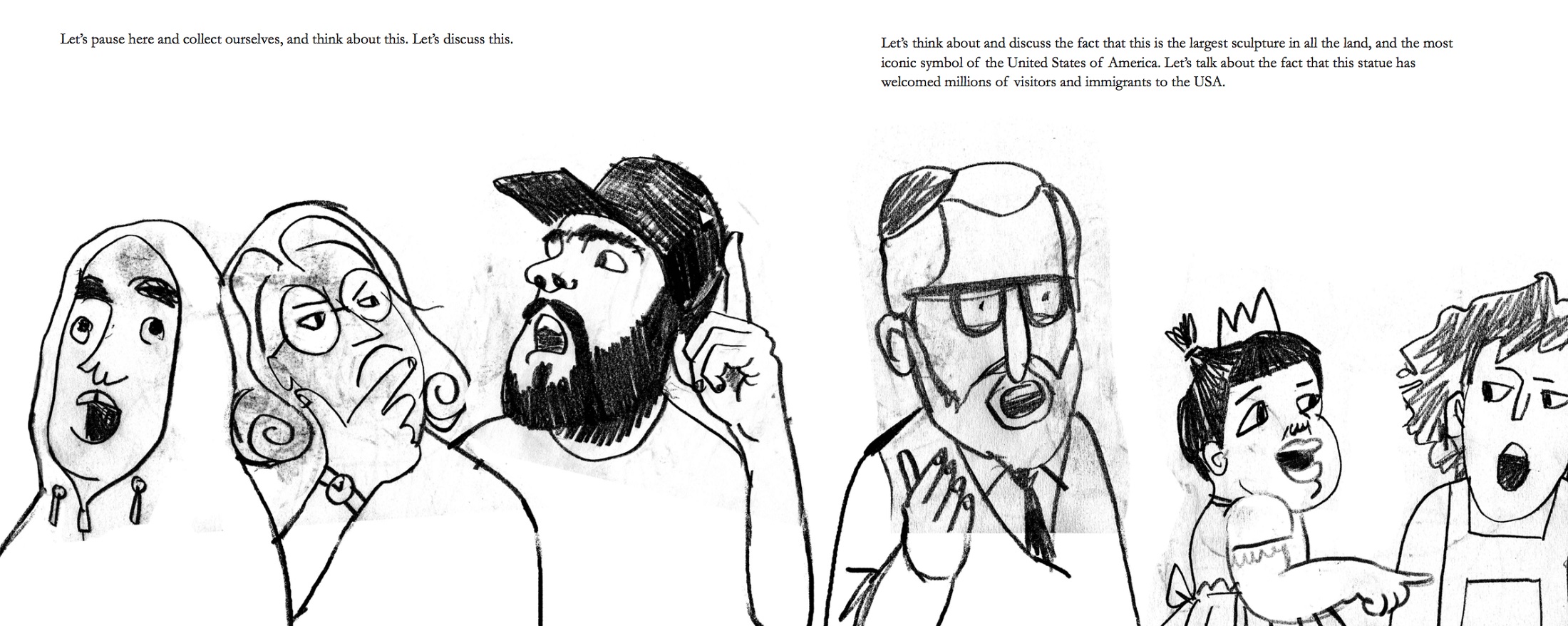
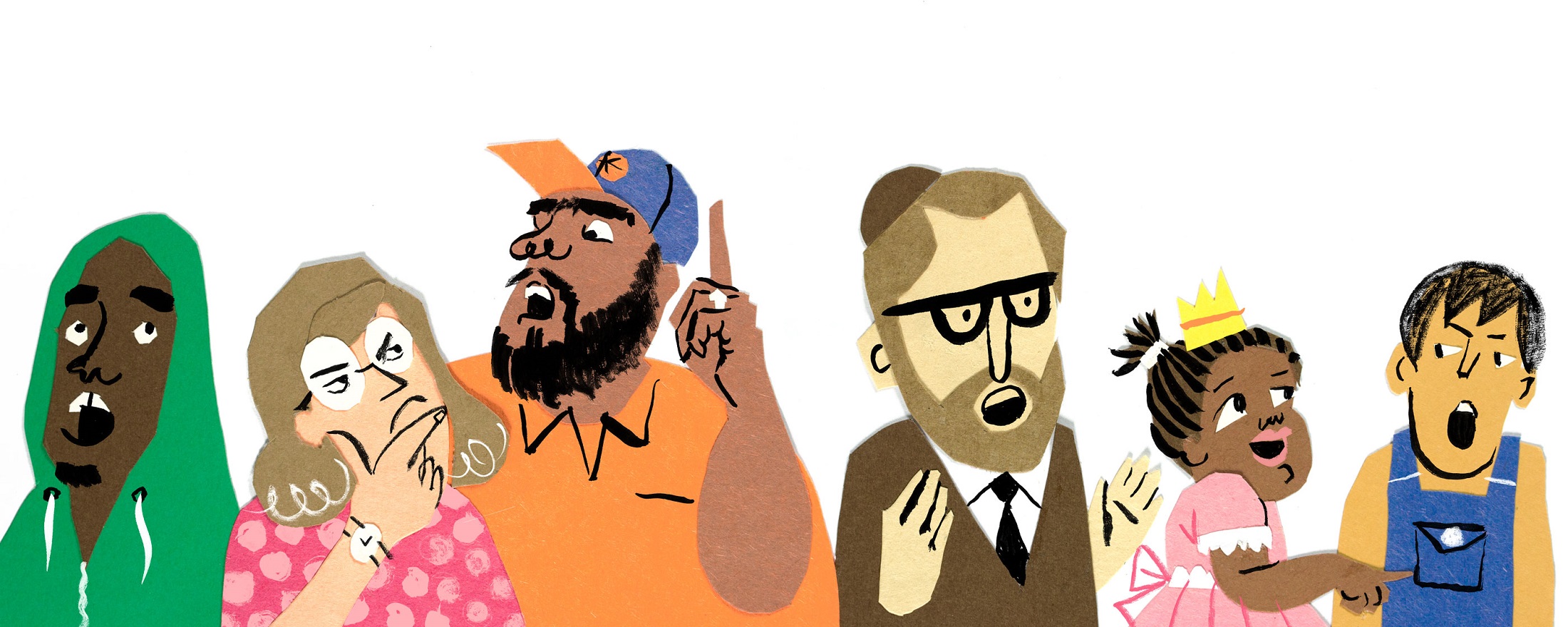
(Click each to enlarge)
I’ve a visit this morning from artist Shawn Harris, who is sharing preliminary and final images from his debut picture book, Dave Eggers’s Her Right Foot (Chronicle, September 2017). This one puts a lump in my throat every time I read it, and it’s a book Leonard Marcus has described as “one part stand-up routine, one part ode to the values that we as a nation have long held dear.”
This 104-page book starts out by laying out the history of the Statue of Liberty, and midway through it shifts to posit a theory. The iconic statue’s right foot, Eggers notes—“her entire right leg,” in fact—is in mid-stride. Where is she going? he wonders. Is she heading to a record store, to grab a panini, to Trenton? She is, he suggests, heading straight toward immigrants, “the poor, the tired, the struggling to breathe free. … She must meet them in the sea.” And that’s because …
“Liberty and freedom from oppression are not things you get or grant by standing around like some kind of statue. No! These are things that require action. Courage. An unwillingness to rest.”
 “I grew up in part in Zimbabwe, and the wild freedom I had then still, I think, acts as an engine to my days. That raw happiness that is possible in childhood is such a gift. But I also remember being dismayed, when I was between seven and thirteen, when people repeatedly told me childhood was the happiest time in life. There is so much of the world that feels opaque and impenetrable at that age, and you are so dependent on the unruly race of adults. Children are fierce, passionate creatures. I think sometimes we treat children and their lives as far more simple than they could possibly be; I want my books, if possible, to act against that impulse.”

 “I love research, and in the case of this book, my main research challenge wasn’t the volume of information or number of sources. … Instead, the big challenge was navigating the potential for tangents and sprawl in my search for a through-line.”
 “The choice to use real children, instead of made-up characters for the book, felt like a natural way to make the experience of a different culture authentic and relatable. I remember as a kid learning about other cultures in books, and a typical page would show ‘Pierre lives in Paris and loves to eat baguettes.’ … By using real kids, not only does the reader learn about cultural specificity, but they also see that people are individuals within their culture and that they have their own unique day that may or may not line up with prevailing cultural expectations.”
 “Who invented the hot shower? I owe most of my first lines to that brilliant person. I can research and write and think and suffer, and then one morning—if lucky—the shower gods deliver a sentence. It is that sentence that allows me to stop researching endlessly and begin to write ….”
 “It is frustrating to see how a willful ignorance is becoming almost a badge of honor for certain people. You see a lot of dismissive statements that are contrary to how science works. So, I think teaching kids that scientists work as a community of fact-checkers who never stop questioning and challenging our assumptions about the world is probably more relevant than ever.”