“I do love the creativity and energy of children. My foundation, the Anyone Can Fly Foundation, is devoted to teaching children about the African American artists that have been left out of the historical canon.”
* * *
Over at Kirkus today, I talk to author-illustrator Faith Ringgold, pictured here. Tar Beach, her first picture book and a Caldecott Honor book, is 25 years old this year. At Kirkus, we talk about that and her new book, We Came to America.
Arriving on bookshelves in September (Candlewick) will be Oliver Jeffers’s and Sam Winston’sA Child of Books, and today I’ve got a little sneak peek. First, they have created one of those newfangled book trailer dealios (to be exact) for the book, which is above. (It’s always fun to hear that Belfast accent.) Also, I have a wee tiny Q&A with the two below, and best of all, I’ve got two spreads from the book.
The book is a celebration of reading and words and story and has been described as a “prose poem.” It features a sort of orphan, a young girl who is “a child of books” and whose home is a “world of stories.” She invites a young boy to join her on a journey in her imagination, one buoyed by a love of narrative. The art is playful, incorporating the text of iconic children’s stories (apparently, forty of them), and even, at one point, lullabies. There’s a lot for observant readers to pore over in this book. As you can see here, typographic artist Sam Winston was the perfect collaborator for this one. (“A continuing theme is his exploration of the hidden narratives found in canonical bodies of text.”) Here is a 2014 interview with Sam at typorn, and I’ve featured Jeffers’s work several times here at 7-Imp, but here’s my 2010 breakfast interview with him.
They talk a bit below about their collaboration on this project.
“Is someone standing looking over the ocean … just like I am doing now?” (Click to enlarge spread)
I’ve got a review over at BookPage of Tarō Gomi’sOver the Ocean, originally published in 1979. If you’d like to read about the book, I send you there. And if you want to see some art from it, I’ve got that here at 7-Imp today.
This morning over at Kirkus, I have a Fall 2016 Picture Book Preview. That is here.
* * *
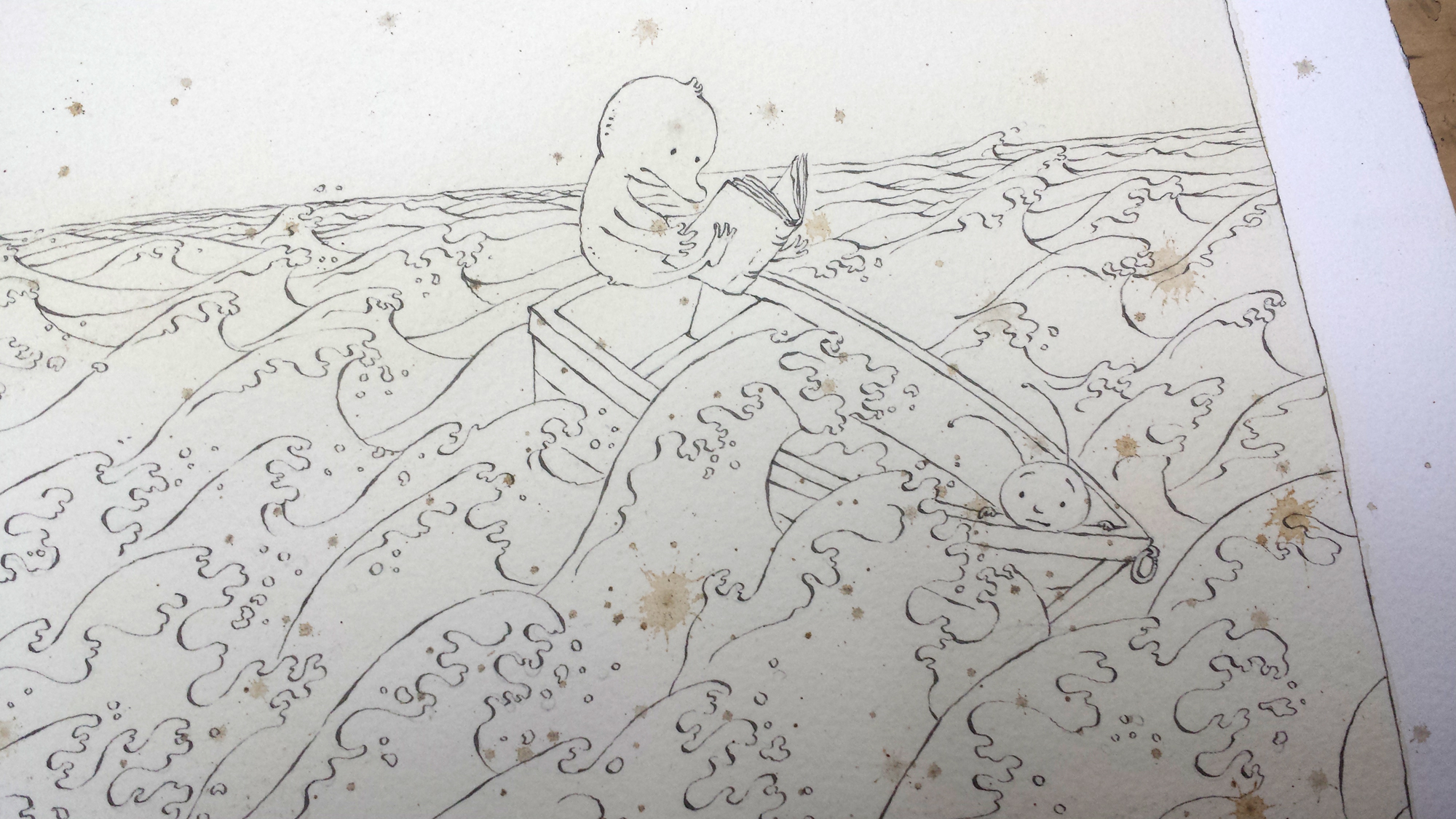
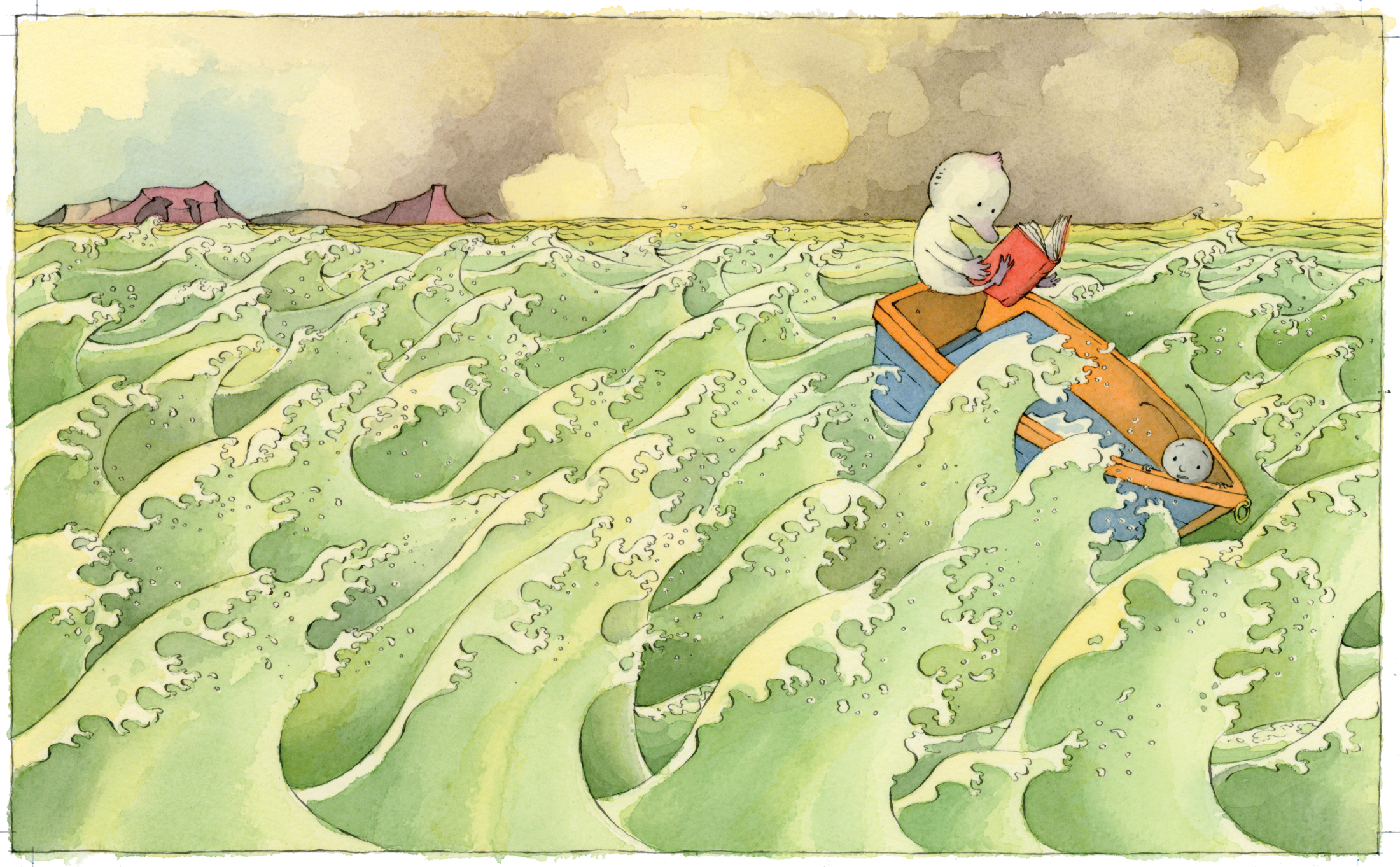
Pictured above is my favorite spread from Sergio Ruzzier’s newest picture book, This Is Not a Picture Book! (Chronicle, May 2016). I wrote about it here at Kirkus last week, and I’m following up today with the Director’s Cut version of the book. That is, Sergio shares some early sketches, as well as early cover images. You’ll see the book was initially named A Book With No Pictures. Sound familiar? When a certain book by B.J. Novak was released in 2014, Sergio had some title-changing to do. “It took me and Chronicle months to decide what to do,” Sergio says, “and more months to find a new title. I’m very happy with the final choice, which is, I think, better than the original.”
I thank Sergio for sharing. I love to see these early images and the book’s evolution. And there’s a bit of final art below, too.
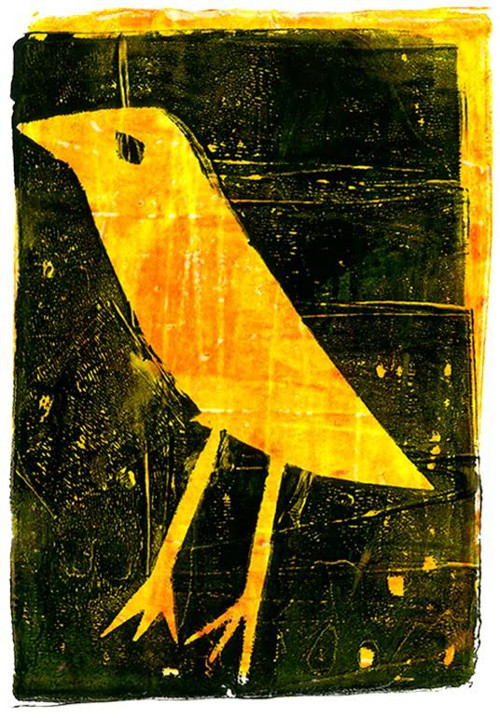
Pictured here is a gelatin print from author-illustrator Denise Fleming. She’s experimenting, while working on some new books. Since she chatted with me last week at Kirkus (here) about her latest picture book, Maggie and Michael Get Dressed (Henry Holt, April 2016), I wanted to follow up today here at 7-Imp with some images and art. She shares quite a bit of process art below, which is fascinating to see — and will have to do, since I can’t just pop over to her house and watch her do her thing.
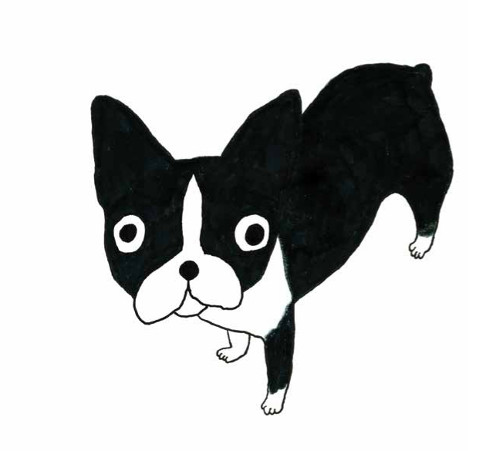
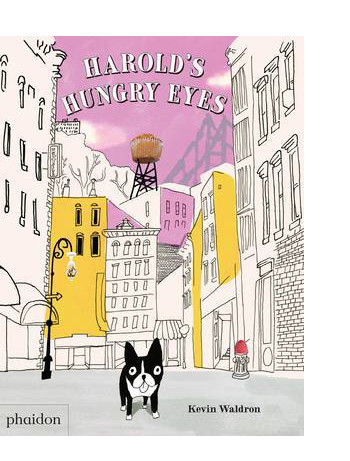
I always like to see the work of Kevin Waldron. His newest picture book, Harold’s Hungry Eyes (Phaidon Press, May 2016) is funny stuff. It’s the tale of a hungry dog, living in the city, who is “insatiably hungry. All of the time.” The only thing he likes about as much as he loves food is his comfortable chair, but one day, he discovers a garbage truck in the process of ditching his favorite place to sleep. After he heads outside to chase the truck, he becomes lost. And then his stomach rumbles: “Harold hadn’t had his breakfast!” His new goal, other than finding his way home, is to find food. And he sees food in nearly every nook and cranny of the city, his mind’s eye filled with veggies where a park is, pretzels where bicycle tires normally go, wafer cookies as steps, ice cream cones where stoplights would be, and much more.
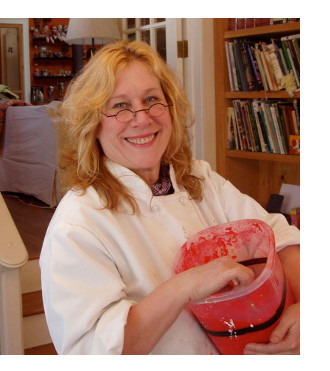
“I am pretty much the same person I was at age 4 or 5. I like the same things. I am still bossy and messy. Animals were my best friends then — and now. Still like to make things using bright colors. Abhor bedtime. Peanut butter, pickles, chocolate, and cheese and chips are my favorite foods. Have added iced tea. Want to touch things I am told not to. Not fond of combing my hair.
See, the younger ones are my peeps. I know them through and through. Those older ones are more complicated.”
* * *
Over at Kirkus today, I talk to author-illustrator Dense Fleming, pictured here, whose debut picture book is 25 years old this year. At Kirkus, we talk primarily about her newest book, Maggie and Michael Get Dressed, but we chat about more, too.
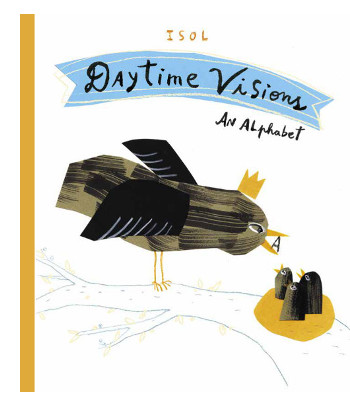
Hello, dear kickers. I’ve got an alphabet book today, one of the best I’ve seen in a long time. It’s from Argentine author-illustrator Isol, who won the Astrid Lindgren Memorial Award in 2013.
Daytime Visons: An Alphabet comes to readers this month by way of Enchanted Lion Books. Isol originally wrote it in Spanish. As she points out in the book’s closing note, “These images were first created using Spanish letters as Spanish is my mother tongue. Translating them into English involved a kind of reinvention. It was fun getting these scenes and characters to enter into a new conversation in English, where they found new ways to live together.” (She goes on to note that she had a lot of help from the wonderful Claudia Zoe Bedrick, as well as Elisa Amado.)
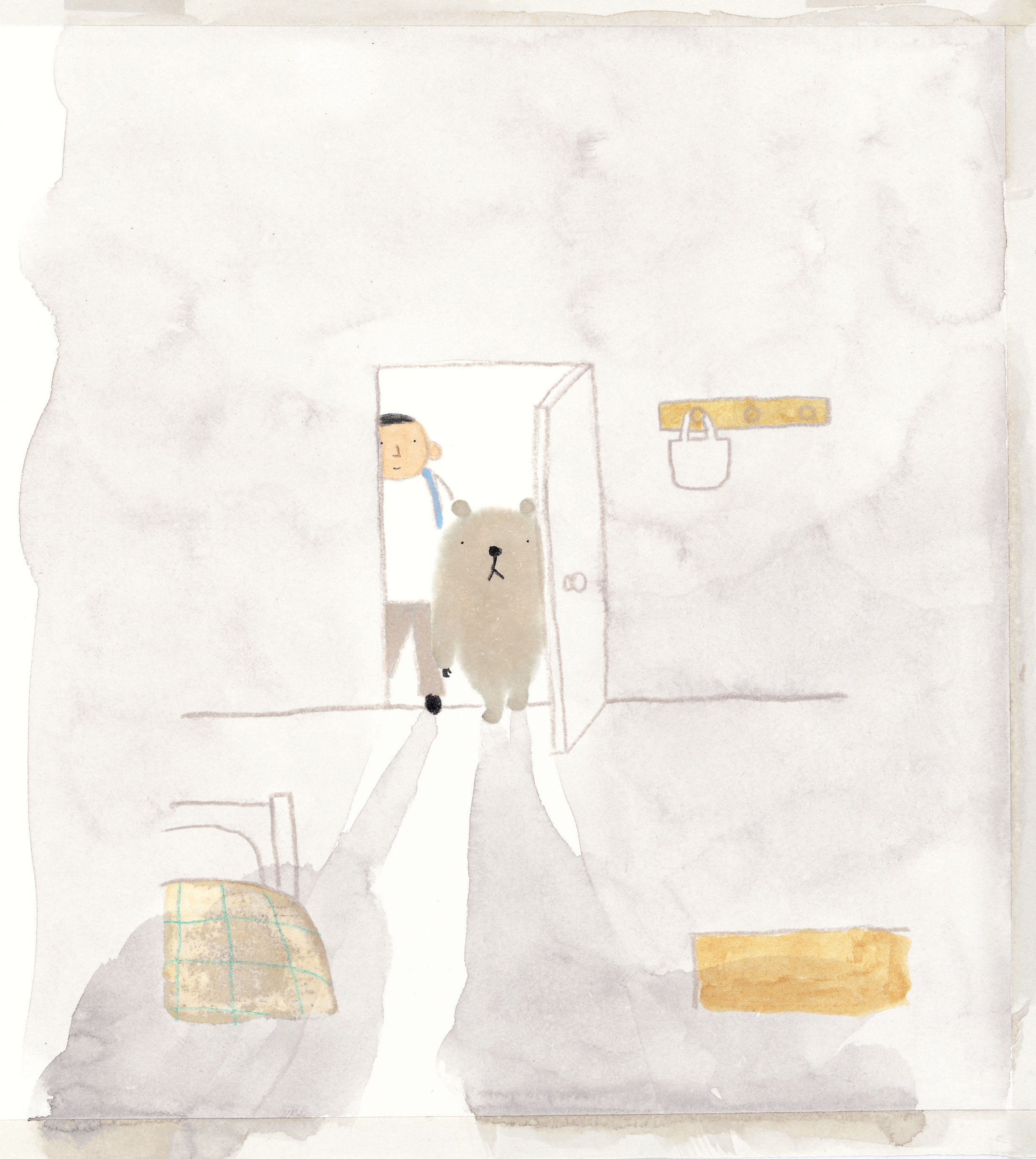
— From Kuma-Kuma Chan’s Home: “I walk into his home. It smells slightly of bear.” (Click to enlarge)
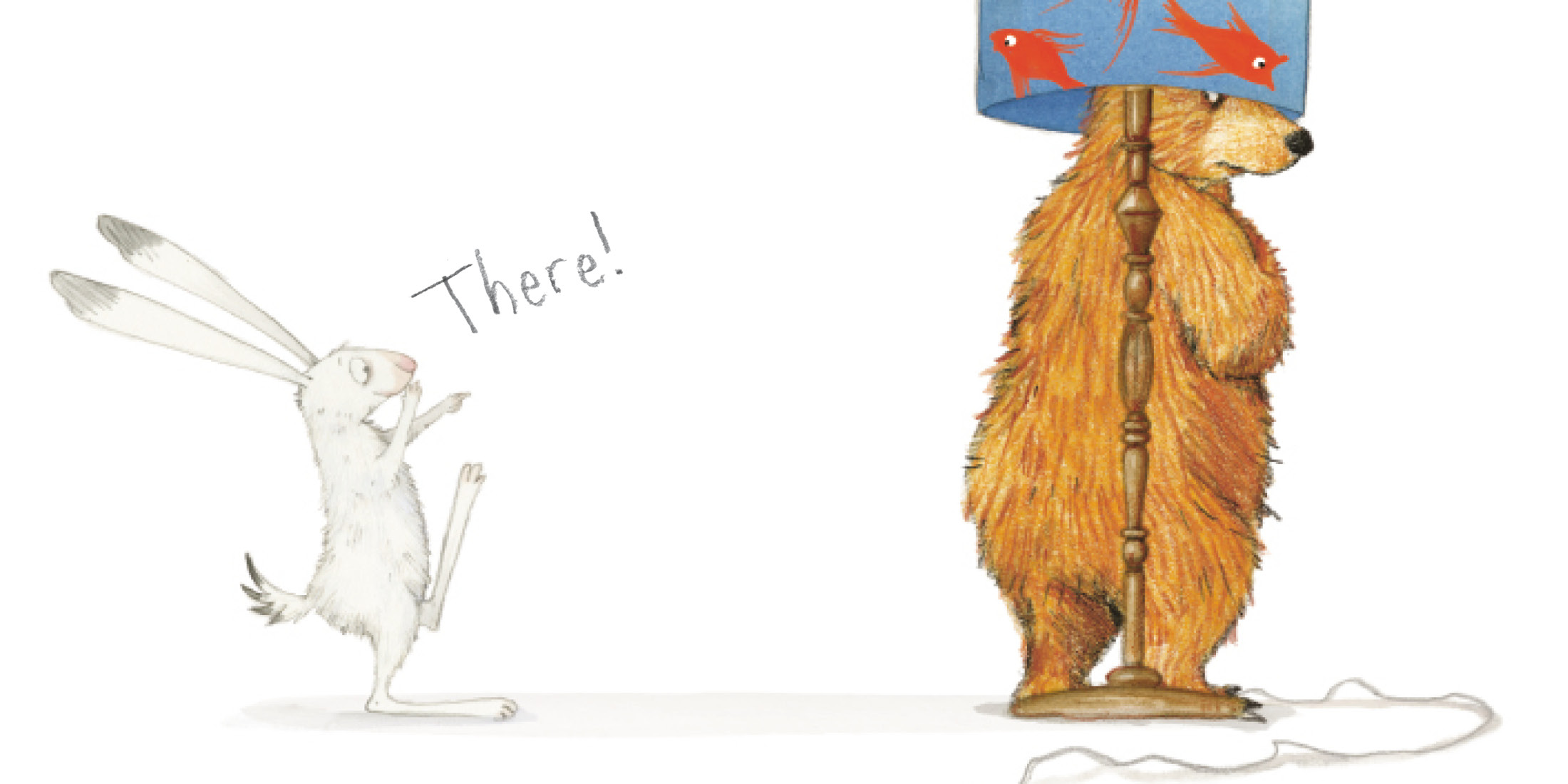
— From Bear & Hare—Where’s Bear?: “There!” (Click to enlarge)
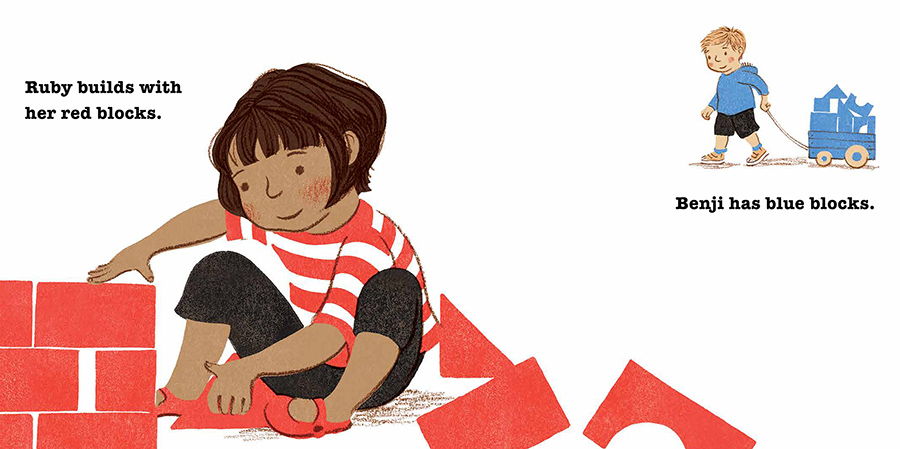
— From Blocks: Note: The text here is different than it appears in the book. (Click to enlarge)
Over at Kirkus today, I’ve got some new children’s lit novels on the mind. That link is here.
* * *
Last week (here), I wrote about Kazue Takahashi’s Kuma-Kuma Chan’s Home (Museyon), originally released in 2001 in Japan but on U.S. shelves this month; Emily Gravett’sBear & Hare—Where’s Bear? (Simon & Schuster), originally released two years ago but also on U.S. shelves, as of last month; and Irene Dickson’sBlocks (Candlewick, May 2016).
From Do You See What I See? — “Up and down lines pull me up, up, up with them, until I feel as tall as a steeple and as taut as a stretched rubber band. I think of lofty trees, a lighthouse rising above the sea, a rocket soaring high into the sky, noble kings in flowing robes.” (Click to enlarge spread)
From Do You Hear What I Hear? — “I hear sounds everywhere around me. Sounds can do many different things. They can put me to sleep—like a lullaby. Or they can wake me up—like an alarm clock. They can take me by surprise—like a sneeze. Or they can follow me—like an echo.” (Click to see spread in its entirety)
Isn’t that what the world of social media calls it? “Throwback Thursday”? I might have just gotten that all wrong.
Anyway. Last week, I chatted here at Kirkus with Helen Borten about the re-printing this year of picture books she created decades ago.
Today, I’m following up with art from Do You Hear What I Hear?, originally published in 1960, and Do You See What I See?, originally published in 1959 — which Flying Eye Books is giving new life.
 Thursday, May 26th, 2016
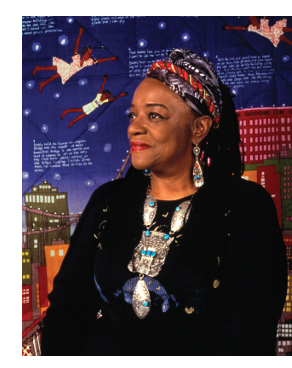 “I do love the creativity and energy of children. My foundation, the Anyone Can Fly Foundation, is devoted to teaching children about the African American artists that have been left out of the historical canon.”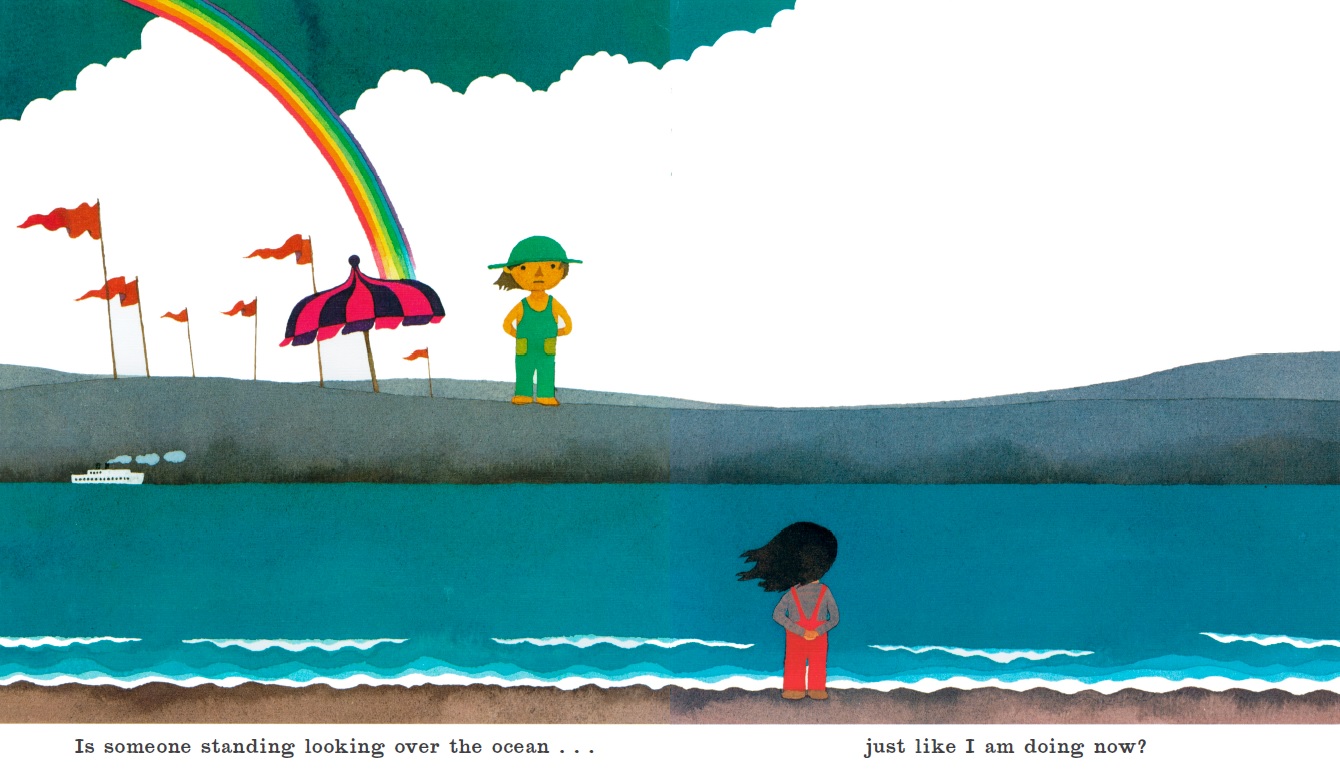
 I always like to see the work of
  “I am pretty much the same person I was at age 4 or 5. I like the same things. I am still bossy and messy. Animals were my best friends then — and now. Still like to make things using bright colors. Abhor bedtime. Peanut butter, pickles, chocolate, and cheese and chips are my favorite foods. Have added iced tea. Want to touch things I am told not to. Not fond of combing my hair.
 Hello, dear kickers. I’ve got an alphabet book today, one of the best I’ve seen in a long time. It’s from Argentine author-illustrator