Poetry Friday: Poetry across the board —
Kuskin, Grandits, & Steven Herrick
 Friday, September 21st, 2007
I know I’m going to look insufferably and nerdily overachieving here, but I’m using my turn for this Poetry Friday to highlight three poetry books across the board, so to speak — picture book, middle-grade, and YA (actually, the Grandits book is more squarely aimed at teens, but it’d work just dandy for a middle-school reader as well). That’s because I can’t choose which to highlight today, not to mention I’ve been feeling rather behind on reviews lately. Here goes:
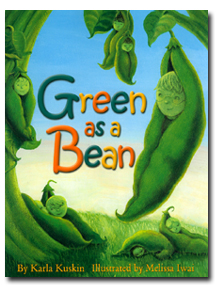
by Karla Kuskin
Illustrated by Melissas Iwai
Laura Geringer Books
January 2007
(library copy)
How has it taken me over three-quarters of the year to find this title? It’s wonderful. Portions of it were previously published in 1960, but here it is now with warm, ebullient illustrations from Melissa Iwai. In this rhyming text, Kuskin — winner of the NCTE Award for Excellence in Poetry, among many other honors — offers the child reader a series of imaginative hypothetical questions: “If you could be green/ would you be a lawn/ or a lean green bean/ and the stalk it’s on?/ Would you be a leaf/ on a leafy tree?/ Tell me, lean green one,/ what would you be?” . . . The other hypothetical questions proposed to the reader involve being square, soft, loud, small, red, fierce, blue, and bright (“Tell me, quite bright one,/ what would you be?”) with a slightly surreal mind-bender proposed at the end. It’s a book to delight and engage in, to share with a group of children at story time, and ponder the world around and the qualities of it. And, as the Booklist review pointed out, Kuskin uses the sound of her words and their meaning to great effect (“If you could be small/ would you be a mouse/ or a mouse’s child/ or a mouse’s house/ or a mouse’s house’s/ front door key?”). Iwai’s imaginative acrylic paintings are soft, fanciful when they need to be and playful-with-perspective in just the right spots. A lively pre-school book, to share either one-on-one or in an interactive story time hour.
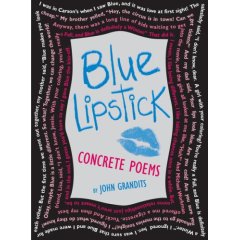
by John Grandits
Clarion Books
May 2007
(library copy)
This is a follow-up title to Grandits’ 2004 anthology of original concrete poems, entitled Technically, It’s Not My Fault, also published by Clarion Books (which I’ve not read but Eisha enjoyed), this title following Jessie, a high schooler with fervent opinions about her pesky younger brother, Robert (who narrated the first anthology); designing her own clothes; volleyball; her cat; “stupid pep rallies” (“I’m not feeling peppy, and the pep rally isn’t helping”); and much more. Book and magazine designer Grandits scores with these visually-enticing poems whose very shapes echo their subject matter, the words and type and design coming together to make a poem and a picture — an hourglass for “Allergic to Time,” a graph which charts out Jessie’s day in “My Absolutely Bad Cranky Day,” and the spray of a shower in “All My Important Thinking Gets Done in the Shower.” Read the rest of this entry �
 Remember when
  I had to read and re-read and re-read again that narrow-it-down-to-five-choices part. I know MotherReader is a laid back, easy-going gal and will not care if I post more than five, but I’m gonna try to follow the rules here. Limiting to five will be hard — but perhaps the mental exercise will be good for me.
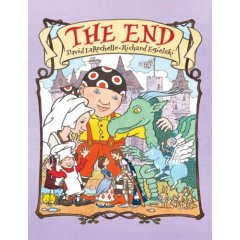
 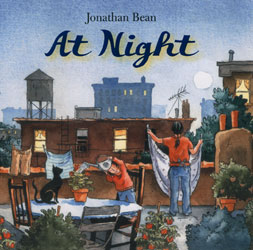 I’m going to tackle Picture Books here, followed by a small stab at Poetry, because that is all I feel qualified to do. I read middle-grade and YA on a regular basis, but I’ve read way more picture books this year. I counted and I’ve reviewed approximately 115 picture books from ’07 (thus far) here at 7-Imp. I’ve read more than that, but most of them that are making my lists below are ones I’ve reviewed here (since I review the ones that I think are outstanding in one way or another), so I’ll link my choices to my reviews — which include why I loved it; the month of publication; the publisher; the web sites, if applicable, of the author and/or illustrator; and all that important stuff, if you care to know it. Here goes:
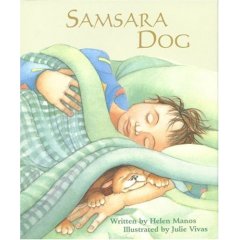 Jules: Many thanks to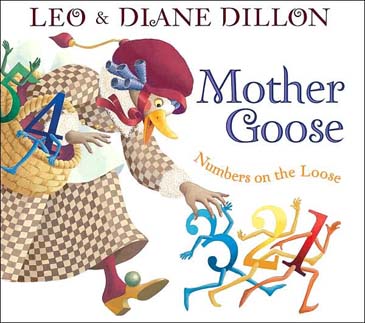
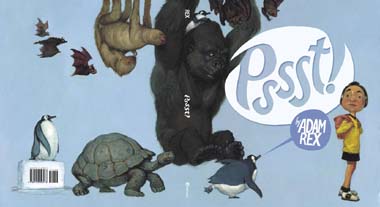
 We here at 7-Imp felt like it was some sort of small crime that we hadn’t yet interviewed
  , all published by
 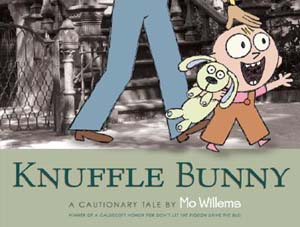 And then in 2005, Mo was awarded a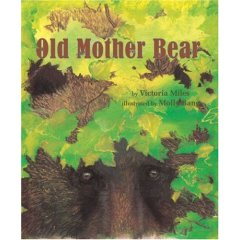
 {Note: For the rest of today’s Radar-Books schedule, scroll down to the bottom of this post} . . .
 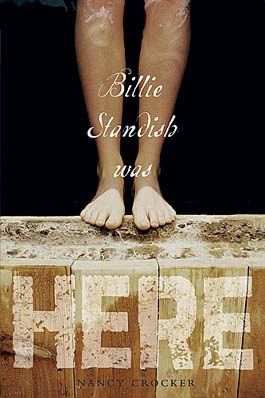 It’s the summer of 1968 in the small town of Cumberland, Missouri, and Billie — from whose perspective the entire novel is told — is eleven years old. Not only does she not register in her parents’ radar on any level whatsoever (other than providing her food and shelter, as if she’s simply a pet to feed), but the town, way past its heyday, suddenly seems even lonelier than normal after a long period of “bone-soaking rain.” School has ended for the summer. Daily, Billie finds herself alone in her room, as usual, her parents never there. When they are there, she is ashamed and afraid to speak up, doing so making her feel flat-out strange (after her mother makes one particularly hateful comment to Billie, she winces: “When she caught me off guard she could still make me wonder just when it was that she decided to stop taking care of me altogether”). After venturing out one day, she sees and hears no one, wondering why the town seems abandoned and feeling as if she might shrink. As she’s about to turn back for home, she sees and speaks to the neighbor across the street, Lydia Jenkins (“{s}he looked like every grandma in the world”) and learns that the town members are afraid the levee may break. Though everyone else seems to be off working to shore up levees against the river, Billie’s parents, Lydia tells her, are still working in the field every day, as always, Billie’s father having remembered that when the levee broke in ’51, there was enough time to sandbag before the water got to town. Eventually, Billie comes to learn that Miss Lydia is the only other person besides her family to stick around, and a friendship with her is born out of circumstance.