Living Long and Prospering in the World of the Arts
 Thursday, September 15th, 2016
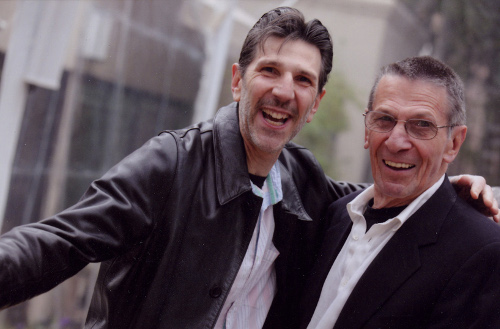
 “When I speak to children or to aspiring authors, I always advise them to listen carefully when their parents and grandparents and best friends and best friend’s parents talk about their lives. ‘Everyone has a story to tell,’ I say. ‘Just remember to write it down.’ And yet why did it never occur to me to write down Leonard’s story?”
Over at Kirkus today, I talk to author Richard Michelson, quoted above (and pictured above, with Leonard Nimoy), about Fascinating, his new picture book biography of Leonard Nimoy (Knopf, September 2016). Illustrator Edel Rodriguez also joins us. Born in Cuba, Rodriguez (pictured right) came to America in 1980 during the Mariel boatlift and learned English from, partly, watching Star Trek with his cousins.
That Q&A is here this morning.
Photo of Richard Michelson and Leonard Nimoy taken by Sylvia Mautner Photography and used by permission of Richard Michelson. Photo of Edel Rodriguez used by his permission.
 “Every narrative is the culmination of a lot of experimentation. For this story, I did know that I wanted readers to feel as if they were experiencing a lot of what Louis was going through as he lost his sight and grappled with what the rest of his life would become because of that.”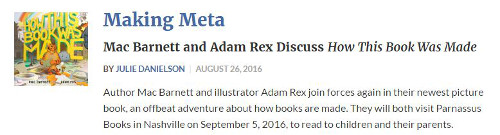
 “The beauty of multicultural books is that they open new doors and windows for readers who are outside the culture. They can live, explore, and enjoy other cultures as they read amazing stories. For the majority of children and adults who were born in the United States, an ‘alien’ is indeed someone from outer space, and they do not associate it with immigrants or immigrant status. For me, as a writer of multicultural children’s literature, it is always important to write authentic stories where my readers can learn and discover the immigrant experience and the experience of living in two cultures.”
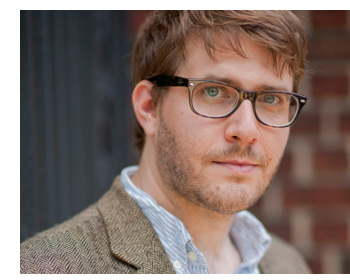 “‘What is the point of a storybook?’ is actually a really difficult question to answer because, at the end of the day, stories are largely frivolous: They don’t fill an empty belly or suture a wound or shelter the lost. And yet every reader knows that something almost mystical transpires when the right reader finds the right story. I was trying to articulate the meaning of that transaction. Ultimately, I found the easiest way to answer the question was to invert it and ask ‘What happens if we lose our storybooks?’ And that question became the foundation of the entire novel.”

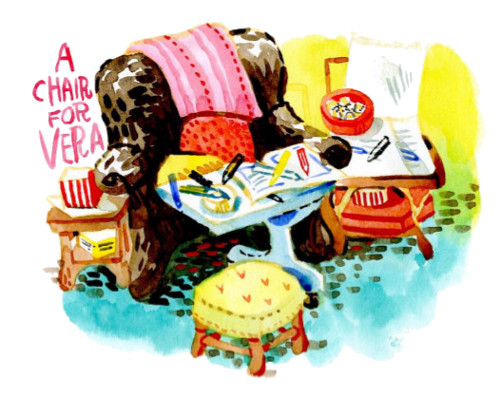
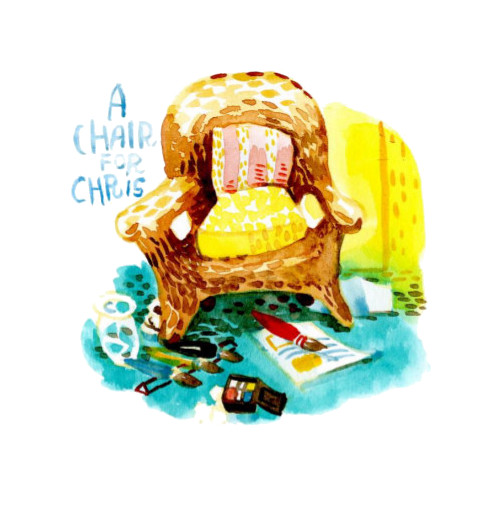
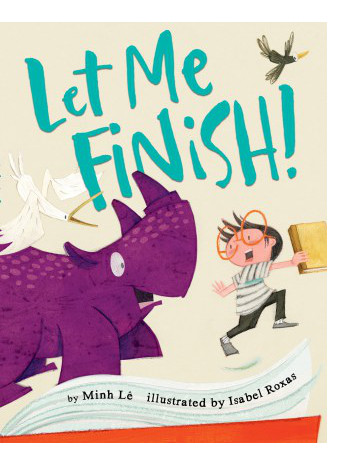 Pictured above is, according to illustrator