A Visit with Artist Keith Mallett
 Tuesday, August 4th, 2015
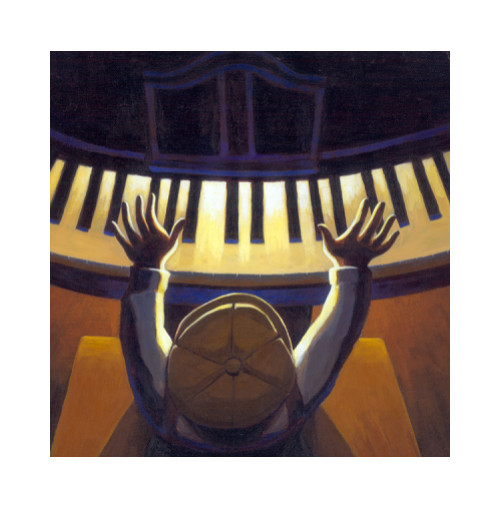
you sat right down at a black piano and you commenced to play …”
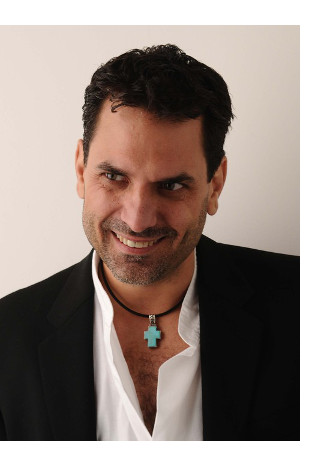
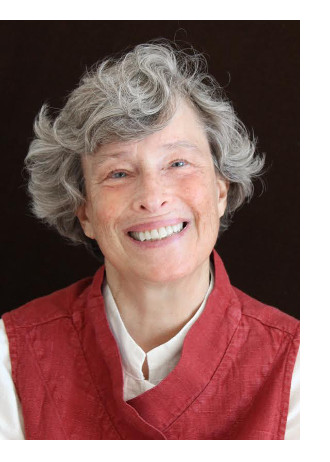
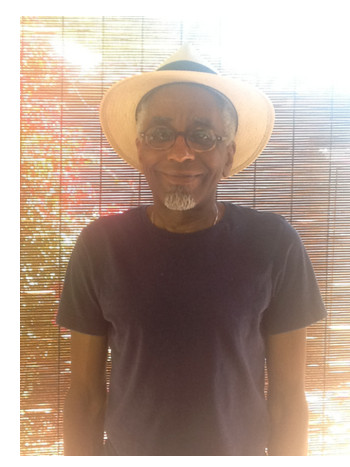 There’s a new picture book biography on shelves, Jonah Winter’s How Jelly Roll Morton Invented Jazz (Neal Porter/Roaring Brook Press, June 2015), illustrated by Keith Mallett (pictured right). The book opens in a tremendously inviting way:
Here’s what could’ve happened if you were born a way down south in New Orleans, in the Land of Dreams a long, long time ago.
Let’s say you had a godmother, and she put a spell on you because she was a voodoo queen. …
Voodoo queen? Hoo boy, my attention is piqued.
Author and illustrator go on to lay out the musician’s early life and rise to fame, as well as his contributions to jazz. They address the whole who-invented-jazz conundrum—“And, to tell the truth of it, maybe Mister Jelly Roll didn’t invent jazz, not exactly, ’cause it took a lot of cooks to make that stew … but he sure did spread it around the towns”—and in an informative closing author’s note [“How Jelly Roll Morton (Might Have) Invented Jazz”], Winter goes into more detail about this and what distinguished Morton from his fellow musicians. Robin Smith captured the book well in the Horn Book’s review: “Much like jazz itself, Winter has created a book filled with ebbs and flows, rhythm and rhyme, darkness and light, shadow and sunshine.”
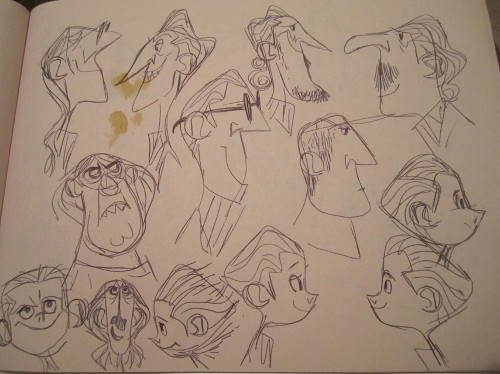
This is Mallett’s first picture book, though he’s been an artist and designer for more than thirty years. His acrylic paintings in this bio, bustling with energy and filled with beguiling shadows, are rich and reverent. He’s visiting today with some art (sans text) and early sketches from the book — and to talk a bit about his work. He even shares a bit of other art (not from this biography). I thank him for visiting.
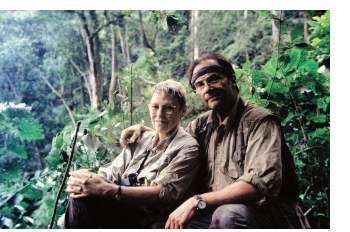 “As children we were both fascinated by a book called I Married Adventure by Osa Johnson. It’s about her and her husband Martin’s travels to wild places around the world. We both aspired to their kind of life, and our childhood dreams came true. Our book is the culmination of all our travels. … We wanted to make this a true representation of what it felt like to be in these places. It would be less than honest if we made all our adventures look like a piece of cake.”
 Well, dear readers, it’s been a while since I’ve done a breakfast interview. Since I’ve been teaching this summer, it takes me longer to get to these more time-intensive Q&As. My visitor today, illustrator
  “The idea of sustainability, respect and nurturing of the land, is not a foreign concept to me, especially because in Hawaii there are lots of traditional morals linking to the earth. …
 “The picture book is such a fabulous form! The great joy of writing picture book text is that I can hold the whole idea in my mind at once, all the way through the process of writing and rewriting. It’s like working with a small jewel.”
 “‘Loquacious’ (used in the book), along with ‘copacetic,’ were two words I learned from my sister’s boyfriend. When I was a kid, I loved knowing these big words. It made me feel grown-up. In fact, when my friends and I used to greet each other with ‘How ya doin’?’, the correct response was ‘copacetic.’ It was like a code or our own secret language, hidden right there in English vocabulary. If you knew the response, you were in the ‘copacetic club.’”
 “Because both Skye and Batty grew out of parts of my personality (as did Jane and Rosalind, though not so much), some of the tensions between the two sisters came from internal struggles of my own. … [W]riting about Batty’s struggles was hard. I had to spend a lot of time re-living scared and lonely parts of my childhood.”