Sophie Blackall on Crushin’ on Aldous Huxley,
Mother Goose’s Sis, and Why Some Crows
Need to Keep a Packed Suitcase Under Their Beds
 Wednesday, March 16th, 2011
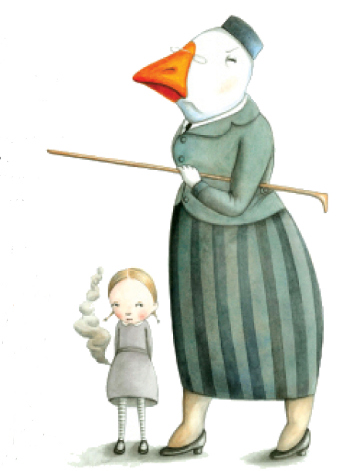 Well. Correction. Illustrator Sophie Blackall isn’t really going to weigh in this evening on her illustrations for Lisa Wheeler’s Spinster Goose: Twisted Rhymes for Naughty Children, a peek into the brat-bustin’ life of Mother Goose’s hard-nosed sister (Atheneum, March 2011), because she really came over to talk about her illustrations for Aldous Huxley’s The Crows of Pearblossom (Abrams, March 2011). I bet you she’s being modest about having two titles out at once and perhaps doesn’t want it to look like she’s taking over the blog today, but you see, I’m fine with her taking over the blog today. And so it is I who will throw in some spreads from Spinster Goose as well, since it makes me inordinately happy to see an illustrator such as Blackall at work on that book. That is to say I very much like her stylized, detailed, offbeat, sometimes irreverent, always emotionally resonant artwork. In fact, she was also the perfect choice for Crows, since Sophie’s not afraid to work some darkness into her work as well. As Publishers Weekly wrote, this is a picture book for kids who don’t mind a bit of that. (“Blackall…pictures a lovely gnarled tree as the prolific {Crow} family’s residence, yet her unnerving watercolors of the glassy-eyed crows reinforce the story’s sinister elements,” they wrote.) With a title like Spinster Goose, you can probably already see that both books embrace their inner darkness. Read the rest of this entry �
 I’ve said somewhere before—perhaps it was here at 7-Imp, though my online stompin’ grounds run together sometimes, meaning it might have been that crazy, whacked out, hyper-hypo cyber-world called Facebook—that, if
  Jules: It’s time to welcome again the very smart Italian blogger with kickin’-good taste,
 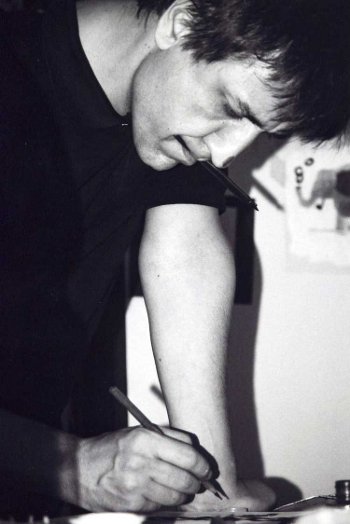 Cris: Complete with mischievous glances and easy-going conversations, often enriched by the expression “hombre,” Javier Zabala embodies all the Spanish pleasantness and the professionalism that only a great artist has when it’s time to open up to others — with humility and generosity.
 It was
  We are talkin’ fairy tales here, so it all kicks off with a “once upon a time,” but then Esmé kicks it up a notch, while also paring it all down, with a series of one-word questions devoted to various fairy tales. A mother puts her young son to bed: “Kiss? Yes. Water? Yes. Bedtime? NOOOOO!” Here come the Three Little Pigs to the rescue. In spot illustrations, we see “Sticks? Yes. Straw? Yes. Bricks? Yes. Solar panels? NOOOOO!” This is the drill for each fairy tale. (The Three Little Pigs are followed by Little Red Riding Hood, Jack and the Beanstalk, Cinderella, Hansel and Gretel, and The Three Bears.) But each fairy-tale moment ends with a detailed double-page spread that proposes a “well, maybe” scenario, each one fairly outlandish and unexpected: Those solar panels get put to use after all, and an all-organic community garden springs up in the pigs’ new neighborhood (as you can see in the spread Elisa shares below); Red’s grandma opens a beauty salon for wolves (also below); Cinderella and her prince go disco-dancing; and more.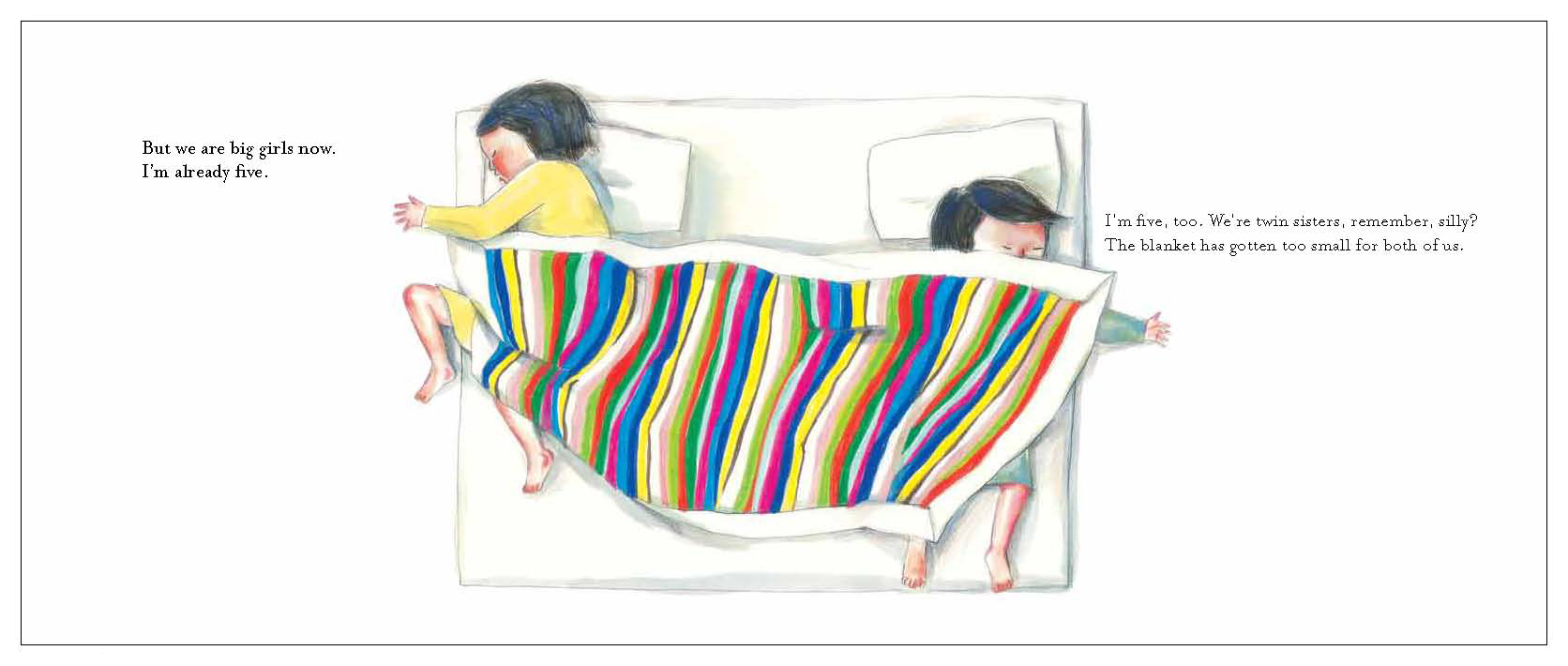
 What’s that? You’re wondering about the picture above, though? It’s a bit early, I know, to be featuring some spreads from a picture book scheduled to be released in August of this year. I know, I know, dear readers. I’m all over the place, seeing as how on Sunday
 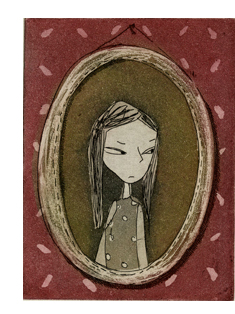 Her upcoming 2011 title, The Twins’ Blanket, featured above (and more below)—which addresses the emotional highs and lows (competition, envy, undeniable bond) of twin-dom—goes to show that she’s continuing her streak of creating books that, in the words (again) of Publishers Weekly, offer us insight into the perceptions of small children. Typically using linoleum block prints, her illustrations are fascinating, depicting both the joy and the darker side of those mysterious things that are the inner worlds of children. Booklist also wrote about her debut title that the absence of text gave kids “room to think,” especially considering the “depth and emotion” she conveyed through the art. You see, I LOVE THAT. I want my life’s music, art, and books—all of it, thanks very much—to give me space to breathe and think. And any children’s book that does that for the wee ones, too, is a good one, in my book. And, really, how often do we see that in picture books? Think about it. Talk amongst yourselves. And get back to me, if you’re so inclined, and we’ll discuss.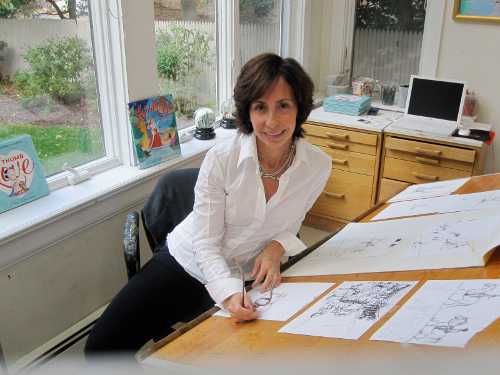
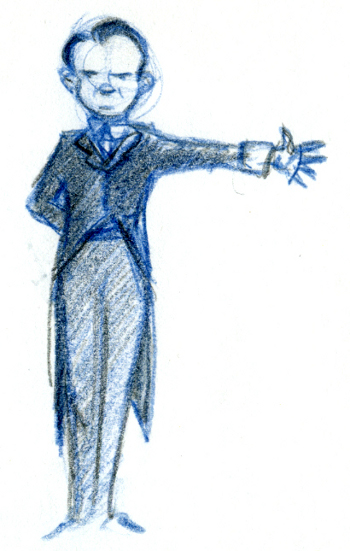 Alfred and I are here to look back on What Happened at 7-Imp in 2010. I’ve done this for the past two years every December, and—
 2010 is grinding to a halt, but before it does, I wanted to invite over to the 7-Imp breakfast nook