Archive for the 'Picture Books' Category

Seven (Plus Some) Very Possible
Dramatic Fish Before Breakfast

h1 Wednesday, June 20th, 2012


(Click to enlarge)

It wasn’t too long ago that I wrote over at Kirkus (and then followed up here at
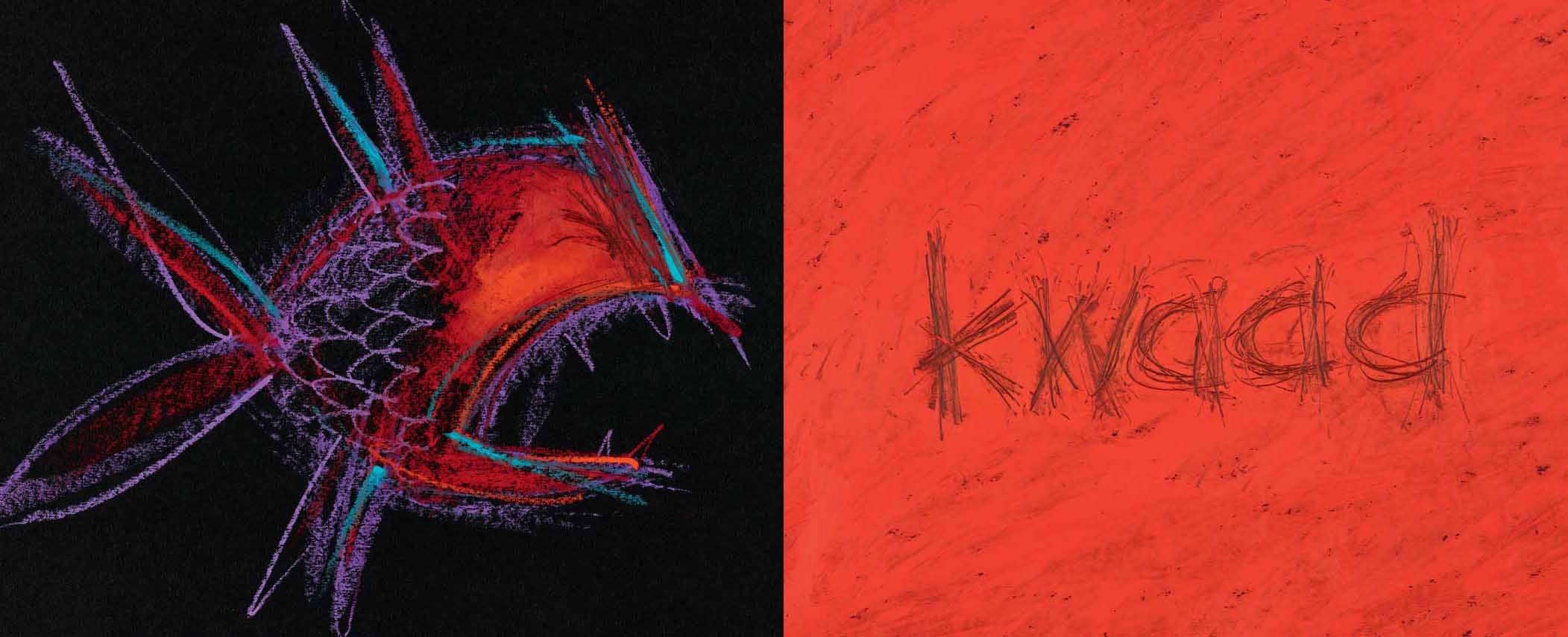
7-Imp with some more art from the book) about a recent offering from the Dutch publisher Lemniscaat. Today, I’m shining the spotlight on one more of their Spring 2012 offerings (as in, the American edition from Lemniscaat USA), Mies van Hout’s Happy, released in April and originally titled Vrolijk when first published in The Netherlands last year.
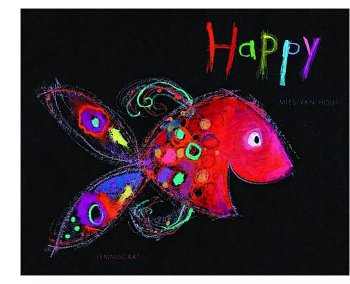
(Featured above is a spread in Dutch—I couldn’t resist—but the rest below are in English. Promise.)

I’ve been sitting on this book a while now and am just now getting around to posting about it. Just last week, Emily Jenkins wrote about it at the New York Times, and I feel compelled to share with you what she wrote, given that she beat me to it and nails the book’s charms:

Mies van Hout’s Happy is a tour de force of underwater awesomeness and emotion, showcasing what an artist can do with a few pastels, black paper and something fundamental to express. I want to hug it and buy a copy for every shorty on my list.
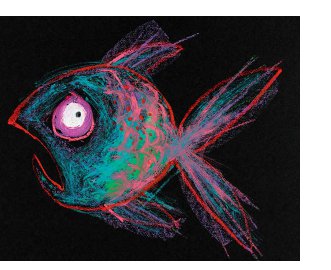
If you want to read the rest of what she wrote, it’s here. As she notes, there is no complicated plot here. We have a series of fish, expressing one-word emotions, but it’s the energy with which van Hout depicts these feelings that is so compelling, not to mention—as Jenkins writes—the “fresh colors” and “strange shapes” put to use. Readers are also presented the types of emotions you’d expect in such a picture book—“surprised,” “sad,” “afraid” (pictured left), and the titular “happy”—but van Hout also throws in some “loving,” “sure,” “astonished,” and “furious” (the spread pictured above in Dutch) for good measure.

There is no shortage of picture books about emotions. As Jenkins notes, we Americans love to go on about our feelings (even though this is a European import). But this one stands out for the dynamic art, the vigorous strokes of pastels and vivid colors. Also, it must be noted: What a fabulous creative prompt this book would be—in many different directions—in a classroom (writing prompt during language arts or art prompt during art class) or school library.

Here are some more spreads. Enjoy (and be sure to click on each image to see the playful pastel lettering). Read the rest of this entry �
One Magnifique Feast with Minette Before Breakfast …

h1 Tuesday, June 19th, 2012

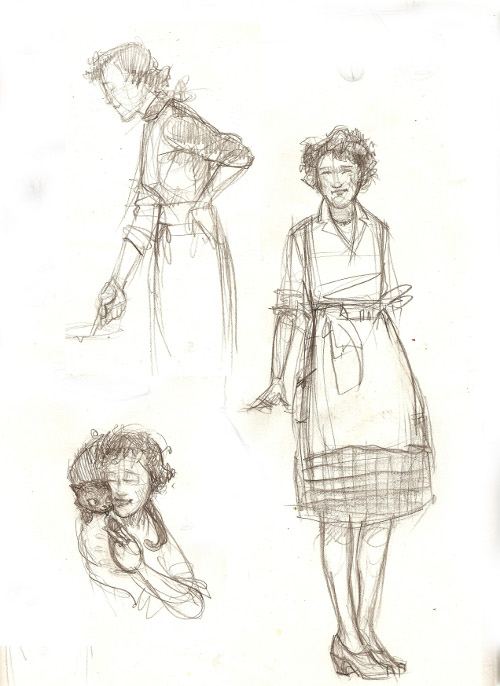
These are sketches of Julia Child from illustrator Amy June Bates. Do you love this as much as I do?

I love Amy’s beautiful art work. As I was telling a friend recently, I get inordinately excited when I find out she’s illustrated a new picture book. And this book’s artwork is simply beguiling. Fortunately, the writing is great, too.

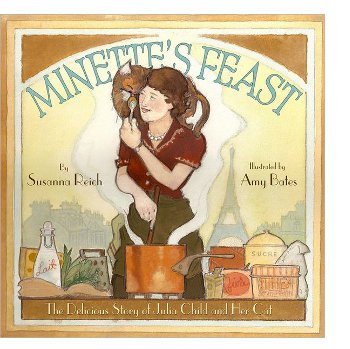
I’m talking about Minette’s Feast: The Delicious Story of Julia Child and Her Cat, released by Abrams in early May. (Be sure to remove the book’s dust jacket to see the wonderful hidden cover.) Written by award-winning fiction and nonfiction author Susanna Reich, it tells the story of a snapshot in Child’s life — the time during which she and her husband Paul lived in Paris, she began classes at L’École du Cordon Bleu, and they adopted a cat. Or, as Reich writes, “shall we say, Minette adopted Julia and Paul.”

This is all about a cat—Minette Mimosa McWilliams Child, “perhaps the luckiest cat in all of Paris”—who was given food scraps by the person who became the most famous American cook and who, in Reich’s words, revolutionized the way Americans eat — yet sometimes turned her “superior nose” up to these dishes, always preferring fresh-caught mouse to, say, Julia’s “scrumptious ‘chicken liver custard'” … But, hey, that’s a cat for you. Read the rest of this entry �

7-Imp’s 7 Kicks #284: Featuring Jeff Mack

h1 Sunday, June 17th, 2012

Happy Father’s Day to all you fathers and father-type people out there. I don’t have Father’s Day-esque art today, but author/illustrator Jeff Mack is visiting and sharing illustrations, and I’m happy he’s stopped by.

So, here’s the thing … About a couple of months ago, I guess it was, I read Jeff’s Frog and Fly: Six Slurpy Stories (Philomel Books, March 2012) and enjoyed it. (Some spreads and the book’s cover are featured below.) These are funny stories, rendered in big cartoon art, for so-called emerging readers, involving a slightly macabre, straight-talk-about-the-food-chain kind of humor. (The frog manages to catch and consume a fly in each story, since that’s how the good ‘ol-fashioned food web tends to work, though in the end, he just might get his comeuppance.)

“Newly fledged readers should be amused by the early-Muppet–style humor,” wrote the Kirkus review. “The comic-book pacing keeps each separate ‘chapter’ fresh and funny, and the sunny palette keeps the tone light, even as the fly gets snaggled, over and over.”
And I had decided back then, when first reading the book, to see if Jeff wanted to visit the blog and share images.

And then, as often happens, I got busy and never asked him directly.

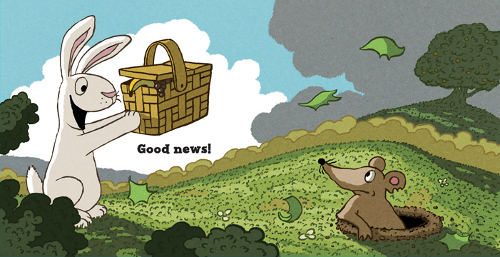
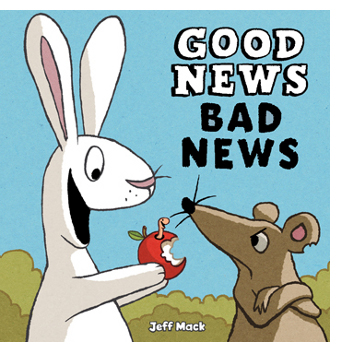
But then, just last week, I read his other new title, pictured here, and my eight-year-old and I laughed our fool heads off. It’s called Good News, Bad News (Chronicle Books), and I think it’s scheduled for an early July release. With just five words (“good news” and “bad news” on each spread — and a “very” thrown in for good measure at the end), Jeff tells the mighty funny and briskly-paced story of two friends, one half-glass-full and one glass-mostly-empty. Rabbit’s cheery nature and spontaneous naïveté, paired with Mouse’s sour disposition, make for some hearty laughs. There’s some slapstick humor to boot, and this one also serves as a great title for emerging readers. (They will read these five words with great confidence, as Jeff relays the dramatic action via the energetic artwork.)

Right after I read this one, I contacted Jeff immediately. Finally. So, he’s here today to share some images from those books, as well as a couple of others that I haven’t seen yet that are forthcoming titles. Read the rest of this entry �

What I’m Doing at Kirkus This Week,
Plus What I Did Last Week, Featuring Elisha Cooper

h1 Friday, June 15th, 2012


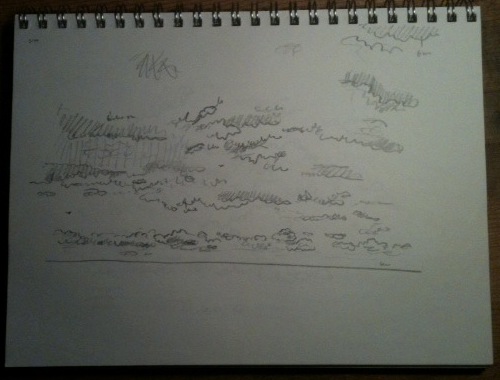
Clouds sketch


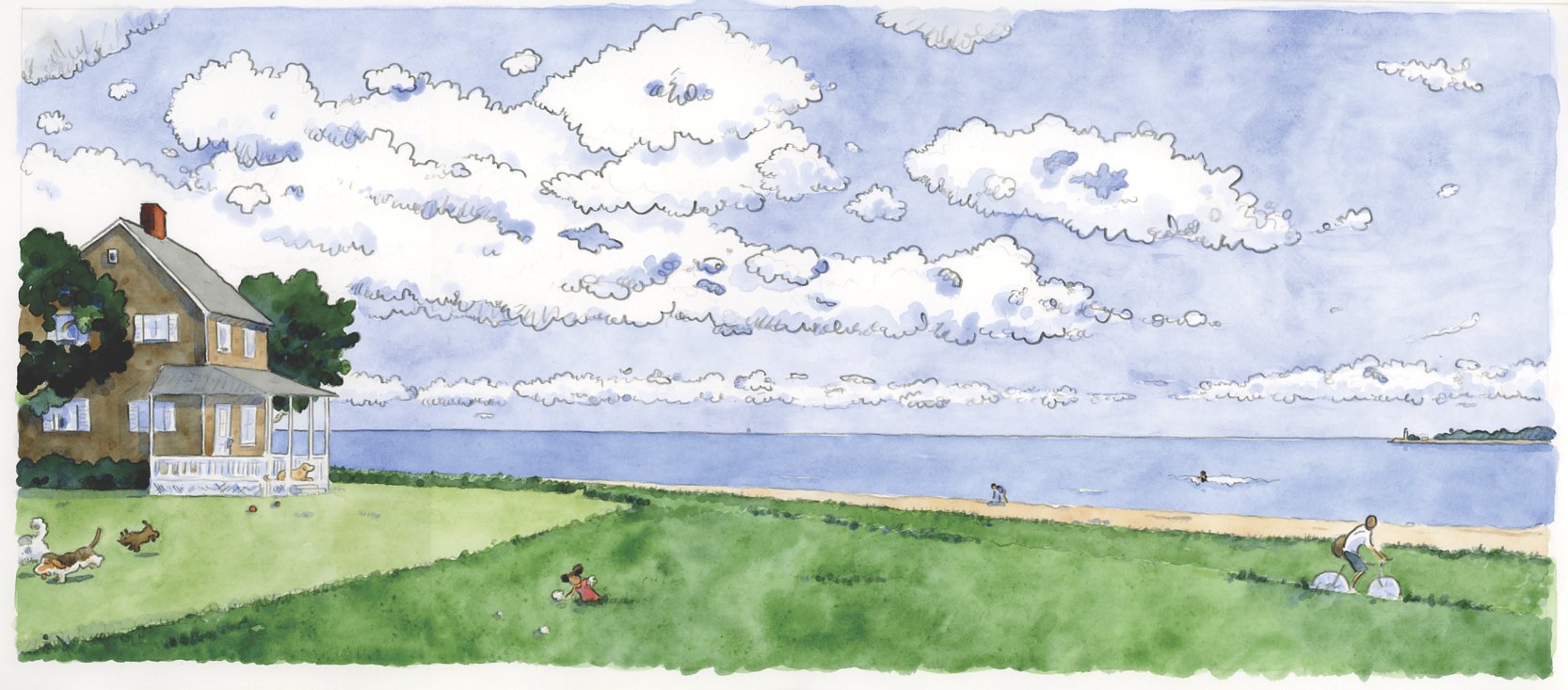
Final spread
Elisha: “This spread was supposed to reference that great illustration in
Blueberries for Sal where, halfway through the book, you see where everyone is.”
(Click to enlarge)

I was a little busy at Kirkus this week.

Yesterday, I chatted with Sam Arthur, the Director of London-based Nobrow Press—whose books are now being distributed stateside by Consortium—about their beautifully-crafted comics, illustrated books, and children’s books. That Q & A is here. Next week here at 7-Imp, I’ll follow up with some images from some of their newer offerings.

Today, I write about the massively good (bad pun intended) Hippopposites by Janik Coat. This is the best board book for children I’ve seen all year. That link is here this morning.

* * *

Last week at Kirkus, I chatted with author/illustrator Elisha Cooper about his newest picture book, Homer. Have you seen Homer? Oh, you must. Here is that Q & A, if you missed it last week and are so inclined to read it now.

For more on Homer, you won’t want to miss this post from Elisha over at Greenwillow’s blog, Under the Green Willow, as well as the follow-up post here. Here’s an excerpt from that first post:

I read somewhere that all stories have one of two plots: man leaves town, or, man comes to town. That’s it. I was thinking about this a few years ago while looking through Kevin Henkes’s Kitten’s First Full Moon, which, in its perfect simplicity, captures the man-leaves-town plot exactly, except that in this case the man is a kitten.

I started wondering, what if I reversed this? What if the “man” doesn’t leave town, or come to town, but stays right there in town and everything comes to him?

Today I have some more art from Homer, including early sketches — and images related to the book. (Wanna see a pic of the real Homer? Read on.)

Enjoy. Read the rest of this entry �

Seven Questions Over Breakfast
with Emily Arnold McCully

h1 Wednesday, June 13th, 2012

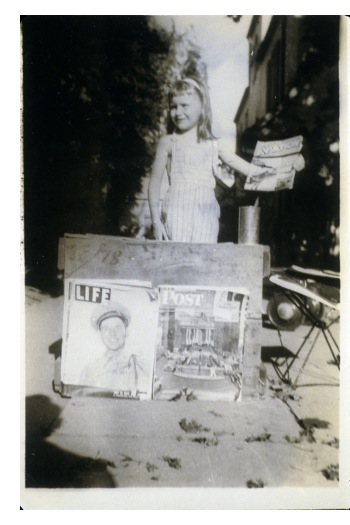
It’s a real pleasure to have Caldecott Medalist Emily Arnold McCully visiting 7-Imp today. This is Emily pictured here, as a child, circa mid-1940s. As she notes at the bio at her site, she was a daredevil girl, born in Illinois but raised in a New York City suburb. Her hero was John Muir, and she decided to be a naturalist one day, but instead she grew up to write and illustrate stories about fellow daredevil girls, lucky for us readers.
Throughout her career in children’s literature, Emily hasn’t stuck to only one style of illustrating. As you’ll read below, she uses cartoon-like art for beginning reader titles and more dramatic pen-and-ink watercolors for her picture book biographies, many of them, as noted, about young girls or women. But, no matter the style in which she’s working, she nails it — the emotional tone, that is. Whether she’s raising the hairs on the backs of our necks in Eve Bunting’s tales (Ballywhinney Girl and The Banshee); bringing to vivid life the stories of historical figures via her watercolors, both sweeping and delicate (The Escape of Oney Judge: Martha Washington’s Slave Finds Freedom, for which she received the Jane Addams Children’s Book Award, or Manjiro: The Boy Who Risked His Life for Two Countries); or making young, emerging readers laugh with the carefree art of her Grandma I Can Read chapter books, she’s expertly creating atmosphere, putting to great use light and shadow and her shimmering watercolors to set a mood and tell a rich tale.

It was for her beautiful impressionistic paintings in Mirette on the High Wire that Emily won the 1993 Caldecott Medal, and she received the Christopher Award in 1985 for the splendid tale that is Picnic. Read the rest of this entry �

They’re Baaaaack …

h1 Monday, June 11th, 2012


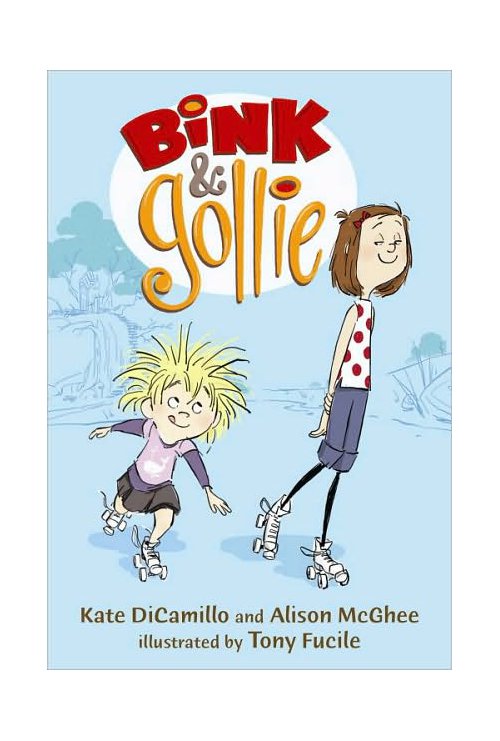
I’ve got some writing deadlines giving me the ‘ol skunk eye, so this will be brief, but here I am with a few words and one glorious spread (separated out into its left and right side, that is) to say that, if you didn’t yet already know it, Bink and Gollie are back.

As in, these entertaining characters, who appeared in 2010.

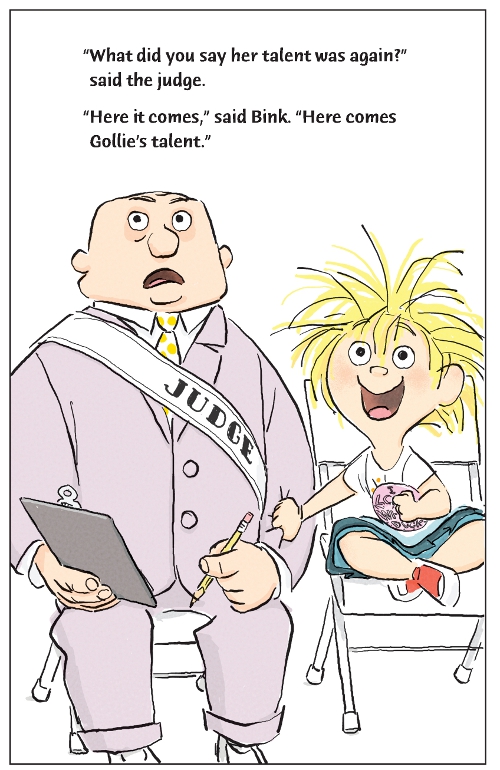
Kate DiCamillo’s and Alison McGhee’s Bink & Gollie: Two for One, illustrated by Tony Fucile, sees its release just this week — once again from Candlewick Press. For this set of three very funny stories, they head to the fair: Bink wants to whack a duck (a laugh-outloud, slapstick tale); Gollie chokes up at the talent show; and they meet up with, as you can see from the cover, a fortune teller.

I couldn’t live with myself if I gave away the stories here, so you’ll just have to find your own copy at your local library or bookstore (and then, by all means, come back and talk to me about it). As with the last set of stories, these tales of two best friends are superbly crafted. Anyone wanting to learn to write stories for children, I would think, would do well to spend some time poring over and pondering the choices DiCamillo and McGhee make in these narratives. These are stories that highlight all the ups and downs of two best buds who know each other well, and they’re written with humor and empathy. (If the second story doesn’t move you in one sympathetic way or another, I’m not sure I want to know you; the spread pictured above is from that tale.)

And Fucile’s seemingly simple, loose lines go so far in conveying great emotion and humor. The book’s penultimate spread, in which Bink pretty much learns all she needs to know from the psychic, is memorable, indeed.

I’m inordinately happy to see the return of one of contemporary children’s literature’s most winning duos. That’s all there is to it.

Who’s with me now?

* * * * * * *

BINK AND GOLLIE: TWO FOR ONE. Text copyright © 2012 by Kate DiCamillo and Alison McGhee. Illustrations copyright © 2012 by Tony Fucile. Reproduced by permission of the publisher, Candlewick Press, Somerville, MA.

7-Imp’s 7 Kicks #283: Featuring Marianne Dubuc

h1 Sunday, June 10th, 2012


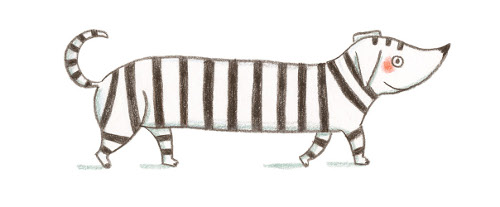
“The wiener dog went disguised as … A zebra.”

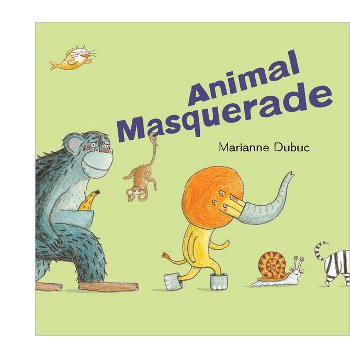
I’m going to keep short the introduction to today’s featured picture book, Animal Masquerade (published by Kids Can Press in March and originally published under the title Au carnaval des animaux), ’cause it’s just so fun that I want to get right to it.

Anyone, by any chance, remember this 2010 book from Canadian illustrator Marianne Dubuc? (That was her first picture book to be translated into English.)

Well, she’s back with a similar book. Similar, that is, in terms of format — it’s another small, square, snug book. But it’s also similar in that, once again, there’s really no dramatic action or complicated narrative thread to speak of here. This time there’s an animal masquerade—“Disguises are a must!”—and each animal chooses a disguise, as you can see below in the art featured here today. As with the last book, page turns are the stars here; each animal’s disguise is revealed after each turn. This propels the book forward with a brisk energy. There’s occasional funny commentary, such as: “The hen didn’t dress up. She didn’t understand a thing. (She isn’t very smart.)” But, for the most part, the child reader can kick back to enjoy the surprises and costume-reveals. And revel in the deliciousness of an animal masquerade. (To be clear, some human animals are involved, too, as well as chocolate cake — perhaps even one disguised as another, as you can see below.) Read the rest of this entry �

What I’m Doing at Kirkus Today

h1 Friday, June 8th, 2012

This morning over at Kirkus, I chat with Elisha Cooper (pictured here from my 2008 7-Imp interview) about Homer, his newest picture book and one of my favorite picture books of 2012 thus far.

Here’s a brief excerpt:

‎”When I was painting the book, I’m sure I was thinking about my daughters. They were heading off to summer camp before returning to me at the end of their day. But in some larger sense, I knew they were also heading off into their lives. This letting-go stuff still sort of kills me. But I know it’s important. If we create space for those we love, then love will come into that space.”

Here’s the rest.

As always, next week here at 7-Imp, I’ll have some more art from it.

Until next time …

Seven Questions Over Breakfast with Eric Velasquez

h1 Thursday, June 7th, 2012

“Becoming an artist,” writes author/illustrator Eric Velasquez at his site, “was a natural choice for me. I have never thought of being anything else.” Born to Afro-Puerto Rican parents and growing up in Harlem, Eric developed a love for art, music, and film from his mother, father, and grandmother. In 1983, he earned his degree from the School of Visual Arts and moved on to a career in freelance illustrating.
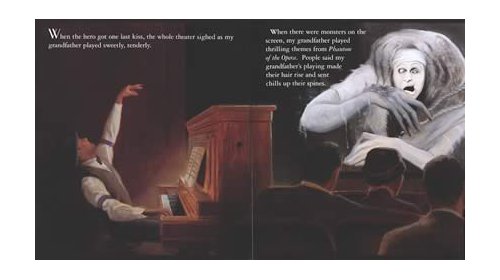
And if you follow children’s lit—particularly if you’re a fan of those illustrators who work in oils, pastels, and realism—it’s likely you know his work. The growing list of book jackets and illustrations he’s done is getting hard to keep up with, to be frank. “To describe illustrator Eric Velasquez as a ‘prolific artist,'” wrote The Brown Bookshelf in 2010, “would be an understatement.” In 1999, he was awarded the Coretta-Scott King/John Steptoe Award for New Talent for the illustrations in his debut picture book, Debbi Chocolate’s The Piano Man, published by Walker Books for Young Readers.

Read the rest of this entry �

Meet Red Knit Cap Girl …

h1 Monday, June 4th, 2012


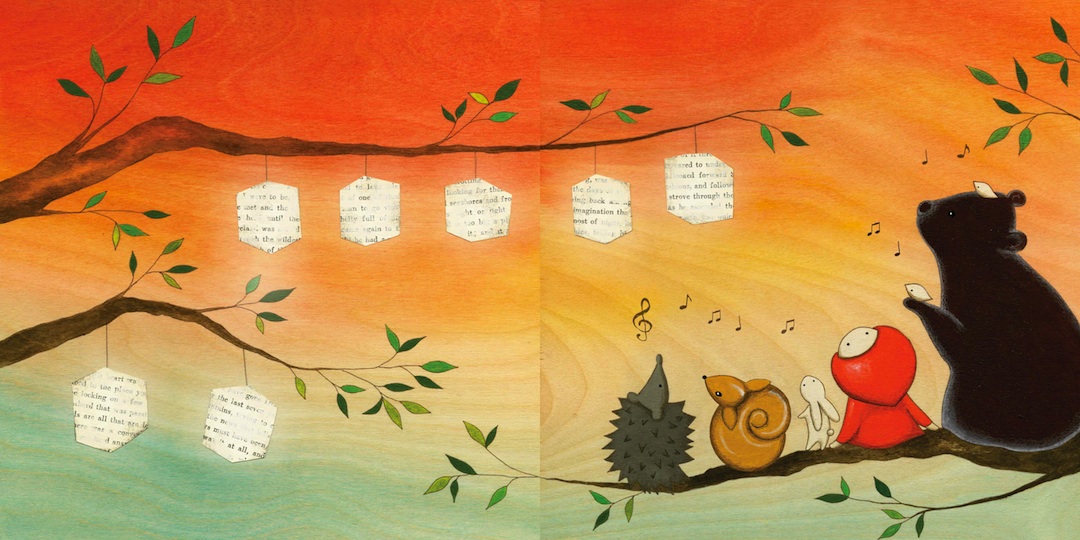
“In the evening, they light the lanterns and sit on a branch to wait for the Moon.
They sing for the Moon as they wait for her. They wait and wait for the Moon to appear. But she is nowhere to be seen.”

(Click to enlarge spread, which is sans text)

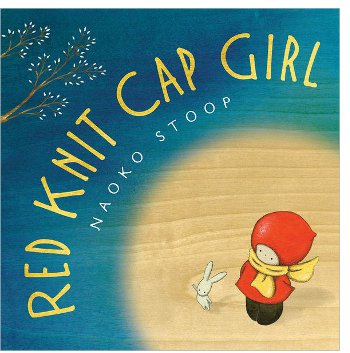
In the bio on the jacket flap for self-taught illustrator Naoko Stoop’s debut picture book, Red Knit Cap Girl (to be released mid-month by Megan Tingley Books/Little, Brown), she writes that she was inspired to write this story after participating in an event called Earth Hour, which encourages people to turn off the lights for an hour. She explains that she once lived in New York City and that it was challenging to see the night sky, given the abundant city lights.

Well, she up and did good with this story, one that could have easily been heavy-handed, given she was trying to make a point about enjoying the beauty of the night sky, no matter where you live.

“In the forest, there is time to wonder about everything,” the book opens. Red Knit Cap Girl sits on a log with her sidekick bunny friend and ponders such things as flowers, butterflies, leaves, and clouds. Mostly, though, she ponders the Moon and wants to get close enough to talk to her. Since her attempts fail, Hedgehog suggests she asks Owl, who knows everything. In a spread showing Stoop isn’t scared of a little dark mystery, we see Owl’s menacing eyes—and only his eyes—peering at her in the darkness from a tree, an effectively goosebump-inducing moment. Eventually, she coaxes an answer from Owl: “The Moon is too far to reach, but if you want, she will bend down to listen to you … You will find a way.” Read the rest of this entry �