Archive for the 'Picture Books' Category

7-Imp’s 7 Kicks #112: Featuring Wendy Wahman

h1 Sunday, April 26th, 2009

Dog-lovers might be particularly happy this week to see that we have a visit from artist Wendy Wahman, who has mostly done editorial art in her career but is now venturing into the world of children’s books. Don’t Lick the Dog: Making Friends with Dogs, which will be released at the end of this month from Henry Holt, is—for all intents and purposes—a how-to manual for children about approaching and interacting with dogs, but it’s way more fun and funny and snazzy (or “jazzy,” in the words of Kirkus) and playful than your typical manual. I could have really used this as a kid and, actually, even now, as I found the tips helpful myself: Now I know what to do if a dog, for one, is grumbling at me and wearing that “ugly wrinkled frown” face.

I’ll let more of Wendy’s art work from the book speak for itself here. (You can click on each image to see it larger and in more detail.)…

Read the rest of this entry �

Earth Day 2009: Anna Alter and
What to Do with Your Old Red Shoe

h1 Wednesday, April 22nd, 2009

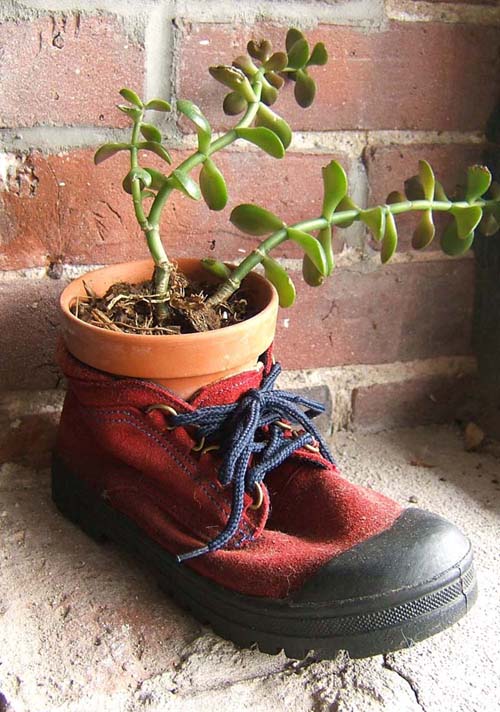
I invited author/illustrator Anna Alter over for some 7-Imp coffee this morning (remember, too, when she stopped by way back in ’07 when our images were tragically small?) to celebrate Earth Day with some ideas for re-using your old red shoe, as well as your bits of old crayons, used wrapping paper, excess toys, ripped shower curtain, and even more. What Can You Do with an Old Red Shoe?: A Green Activity Book About Reuse is Anna’s newest title, just in time for Earth Day, and released in March by Henry Holt.

This is a craft book, and it works on every level, seeing as how it has 1) Anna’s appealing menagerie of anthropomorphized animal characters (you know you can’t resist bunnies in swimming trunks and shades), 2) practical ideas for reuse (with precise instructions for projects, step-by-step instructions that also don’t manage to condescend to the child reader), 3) rhythmic, buoyant narrative poetry included at the opening of each spread, and 4) Anna’s cozy, warm, oh-so-inviting, and detailed acrylic artwork. Why am I ennumerating my points this morning? I dunno. Not enough coffee yet? Onwards and upwards, though…

In other words, it makes the idea of recycling and reusing fun for children. And, I’m sorry, but HOLY CRAP and oh chirren (as Haven Kimmel would say), I get scared when I think about the state of our planet and all our bloomin’ JUNK, and it’s way past time to be casual about taking better care of it. (My apologies to the probably ever-so-eloquent Anna Alter for that moment of INeloquence on my part). The book makes a great addition to school units on environmentalism, as well as for homes in which parents are eager to teach their children about their carbon footprint. (Well, we’re not talking specifically about greenhouse gases here, but you know what I mean.)

Read the rest of this entry �

Seven Questions Over Breakfast with Sean Qualls

h1 Tuesday, April 21st, 2009

Boy howdy, have I been looking forward to this interview. Sean Qualls is one of my favorite new illustrators, one whose career I follow with great and geeky interest. His mixed-media artwork (mostly painting, drawing, and collage) never fails to surprise, and I must add, as odd as it might sound, that I particularly love his consistent use of circles. (See the sketches and spreads below for Dizzy and Before John Was a Jazz Giant as excellent examples of my point, what with the “the sounds dreamily dancing through the air amid streaming ribbons of music,” as School Library Journal put it in their review of the latter title, a 2009 Coretta Scott King Illustrator Honor Book.) And, in the words of Kirkus, Sean’s got his own unique “sonic iconography,” and he’s got it down pat.
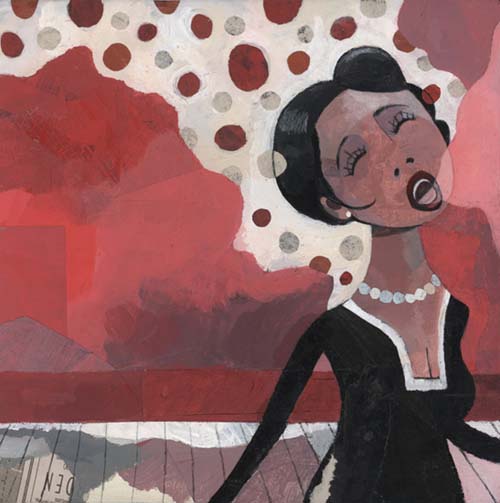
You know, like this:


A Precious Moment

Read the rest of this entry �

No One Does the Food Chain Quite Like Steve Jenkins

h1 Monday, April 20th, 2009

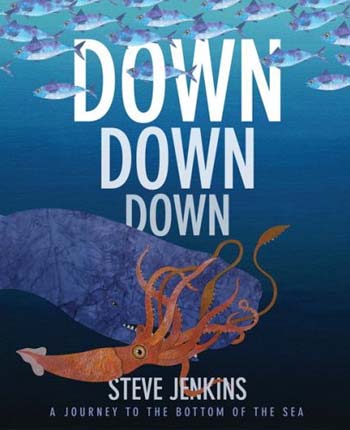
I’ve posted here at 7-Imp about author/illustrator Steve Jenkins and his torn- and cut-paper collages several times before, including this interview from over a year ago. I’ve made my fondness for his books quite clear. When I asked him recently if he could share some spreads from his new title, he said yes. Lucky me, because I love this book. It’s called Down Down Down: A Journey to the Bottom of the Sea (to be released in early May by Houghton Mifflin), and just when I thought that Steve’s books couldn’t possibly get any better or more interesting…

Viewed from space, the earth looks like a watery blue ball. Oceans cover more than two-thirds of the globe’s surface, and well over half the planet lies beneath water more than a mile…deep. We have explored only a fraction of the oceans. In fact, more humans have walked on the moon than have visited the deepest spot in the sea.

This is how Jenkins opens the book, then telling us we’ll be descending from the surface of the ocean to the sea floor, travelling through “one of the most extreme environments on earth.” In fact, in the next spread we see that he actually begins above the surface, showing us that sometimes, “without warning, the creatures of this hidden world burst into our own…sea creatures sometimes leap from the water into the air…” (great white shark, flying squid, spinner dolphin, etc.) Indeed, he eventually takes us to the deepest spot in the sea, in which almost seven miles of water rest above our heads, to the Challenger Deep. In between, he puts to use his usual charms on each and every spread: His richly-textured images and detailed visual data, as well as his ability to lay out sea-life facts in an engaging manner, appealing to a wide variety of ages. (My own very young children, who are drawn to Jenkins’ titles like candy, actually use the book as a toy—though we’ve read it precisely seven bajillion times, too—putting their small dinosaur creatures on the book’s sea spreads to interact with the ogrefish, goblin sharks, deep-sea jellyfish, and giant squids.) My favorite fun fact? Bioluminescence—when animals can produce their own light, as most of the sea life that live below the sunlit layer of the ocean do—is the most common form of animal communication on earth. Who knew.
Read the rest of this entry �

7-Imp’s 7 Kicks #111: Featuring Beppe Giacobbe
(And a Little Carin Berger)

h1 Sunday, April 19th, 2009


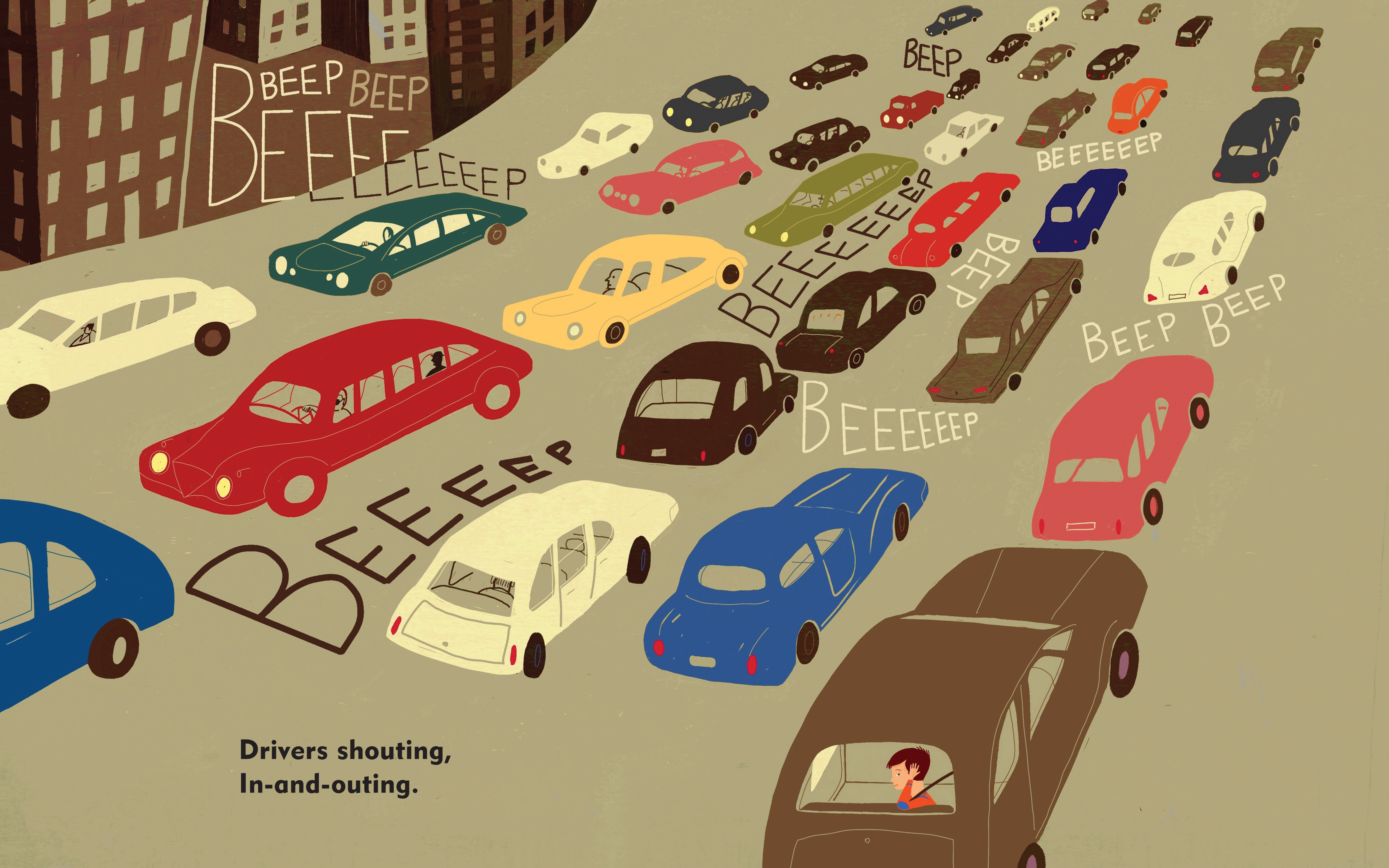
Jules: See those cars, in-and-outing? I’m one of those, on my way to East Tennessee for a Very Exciting Day, but I’ll get to that in a minute.

This morning, 7-Imp welcomes acclaimed Italian graphic artist Beppe Giacobbe. Well, I wish I were welcoming him, but I wasn’t able to get in touch with him to see if he’d like to stop by, to say hello (in either Italian or English), and to show us some other art work — though I tried. Bummer. Because I love his art work, which is new to me and which I first saw in the new picture book by the award-winning and quite prolific author (AND poet AND essayist AND reviewer AND even more), Robert Burleigh, entitled Clang! Clang! Beep! Beep!: Listen to the City, to be released in early May by Simon & Schuster (Paula Wiseman Books). I can at least show you two spreads from that today. Here’s the other:

Read the rest of this entry �

Seven Impossible Interviews Before Breakfast #82
(The Poetry Friday Edition): Laura Purdie Salas

h1 Friday, April 17th, 2009

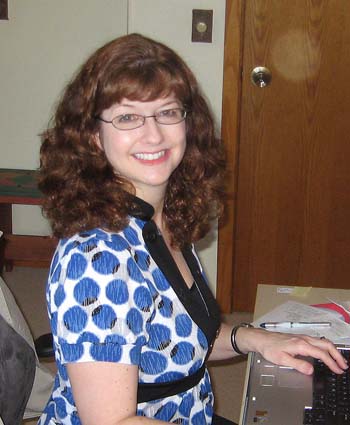
I’m happy to welcome author/poet/blogger Laura Purdie Salas this morning, a big cup of strong, pipin’ hot coffee extended as we get ready for a 7-Imp chat. I’ve wanted to interview Laura for a while, though some folks may remember that she stopped by exactly one year and one day ago with the rest of the Poetry Seven for a group interview. Today, though, she’s goin’ it solo, and she’s here to talk a bit about her new book, Stampede!: Poems to Celebrate the Wild Side of School, published this month by Clarion and illustrated by Steven Salerno, as well as discuss her blogging and other writing.
Laura is a former teacher and has written over fifty books for kids and teens. She writes nonfiction titles, as well as poetry, including 2008’s Write Your Own Poetry, geared at upper-elementary and middle-grade students. Last year, she also published ten poetry titles with Capstone Press, a set of books in which she incorporated a number of poetic forms. Her web site has lots of information about her titles and also includes information about her writing presentations and school visits. For Stampede, Laura’s first trade picture book, she conducted an online launch party, an intriguing idea for us wallflowers of the world. I asked her about it, and she discusses that a bit below. Laura also blogs over at her LiveJournal home, often presenting writing challenges and ideas for other writers and poets, such as this recent example, and always sharing the results with her readers.

I thank Laura for stopping by. Let’s get right to it . . .

Read the rest of this entry �

City (and Garden) I Love

h1 Wednesday, April 15th, 2009

Want to know about one of my favorite new poetry titles, as we land here today smack dab in the middle of National Poetry Month? Well, I’m going to tell you, as well as show you art from another new picture book title I love (non-poetry, that is).

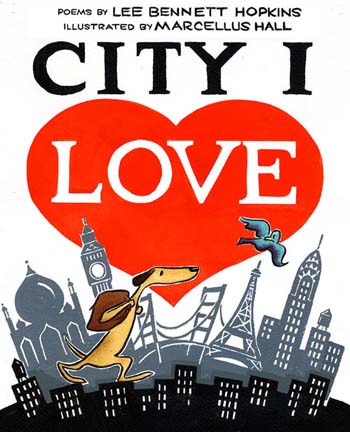
This is the opening poem from Lee Bennett Hopkins’ new picture book poetry collection, City I Love, illustrated by Marcellus Hall and released by Abrams Books for Young Readers this month. This is a collection of eighteen poems from Hopkins, poems serving as a tribute to the big cities of the world and everything that makes them pop, celebrating the diversity of city life. Hall, whose debut work illustrating a children’s title I evidently missed last year (but just promptly requested from the library), has created art work for many newspapers and magazines, including the New York Times, the New Yorker, and Time. In this title, he takes us to specific locales all over the world with his detailed and almost sparkling watercolor cartoons (Tokyo in “City Lights,” Moscow in “Winter,” and New Orleans in the haiku, “Sparrow,” to name but three). The visual thread holding the poems together is the dog-bluebird duo travelling the world in Hopkins’ poems, which range from contemplative to jubilant. The endpapers are composed of world maps, noting the cities which the dog and his companion travel. Map-lovers just might squeal.
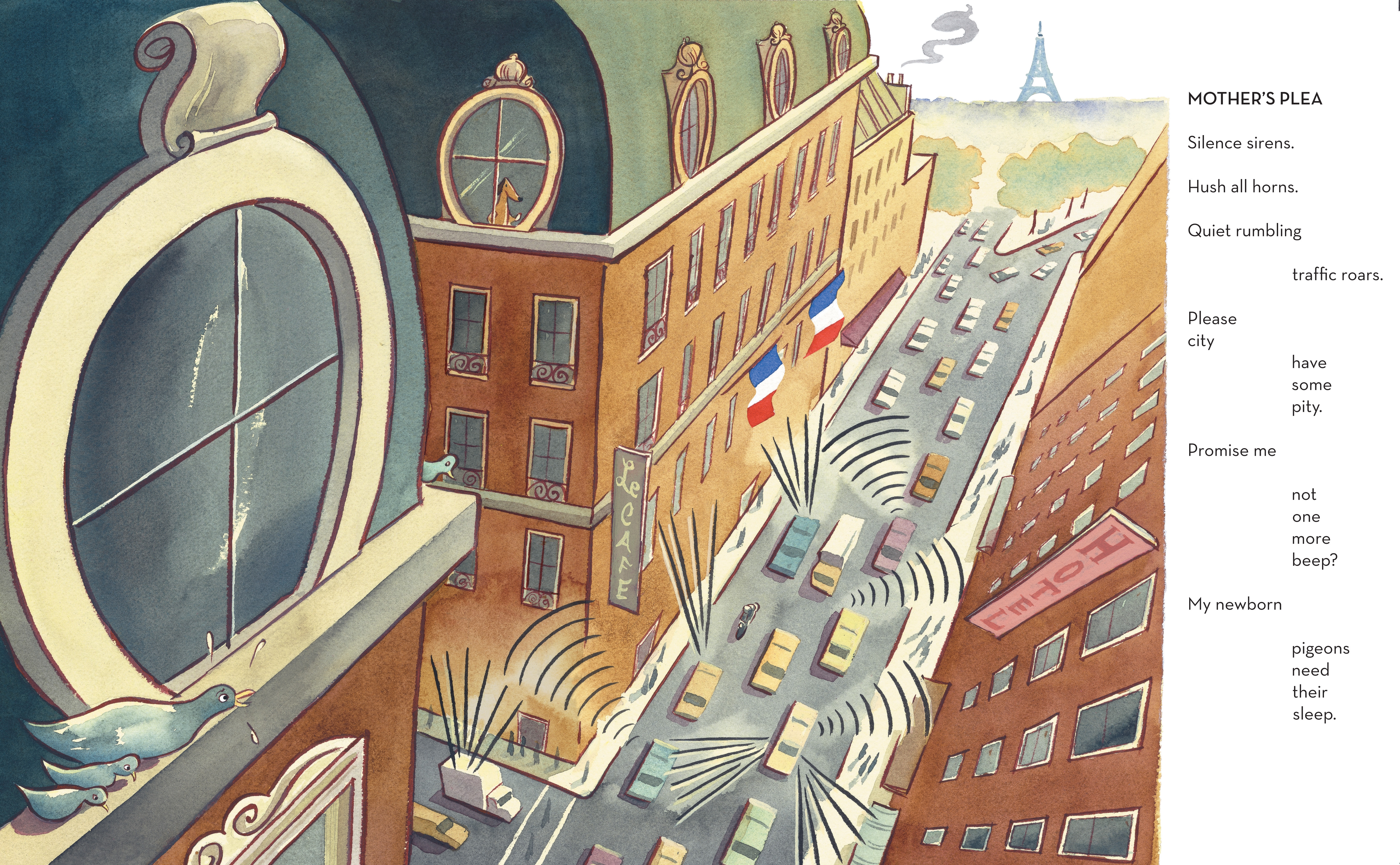
I’ve got some spreads from it to show you so that we can let Hopkins’ engaging poetry and Hall’s art (which channels Syd Hoff a bit, and that’s a good thing) do the talking. Click on each spread to see better:


Read the rest of this entry �

Seven Questions—And a Little Bit of Soup—Over Breakfast with Calef Brown

h1 Tuesday, April 14th, 2009

The phrase “signature style” gets thrown around a lot when folks are talking about the work of authors and illustrators, and if you ever meet someone to whom the meaning of that phrase is unclear, just show them the work of Calef Brown. The signature in his style is his and his alone, unlike any other. Sure, you can take his quirky wit and very angular illustrations on a flat plane and liken his style to others’ (the wonderful work of Maira Kalman comes to mind, for one), but no one else does creative proportions, purple faces (and almost every other shade imaginable), distinctive elongated noses, and the overall postmodern folk-art vibe quite like Calef. His art has an energy that jumps off the page, and the best thing about his poetry is that you never quite know what you’re going to get. Happy surprises all around.
Read the rest of this entry �

7-Imp’s 7 Kicks #110: Featuring Jason Stemple
and Jane Yolen

h1 Sunday, April 12th, 2009

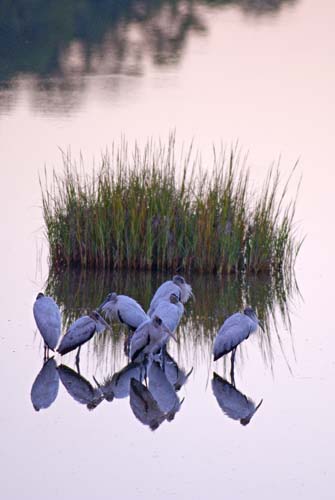
Jules: In a continued celebration of National Poetry Month, this morning 7-Imp welcomes author and poet Jane Yolen and freelance photographer Jason Stemple, who happens to be Jane’s son. Jason’s photography has illustrated over ten of Jane’s previous titles, and their latest artistic collaboration is the beautifully (and cleverly) designed, A Mirror to Nature: Poems About Reflection, released this month by Wordsong. The book features twelve poems, along with Jason’s nature photography, which reflect upon (excuse the bad pun) the doubled images and patterns created by the reflective nature of water. “The first mirror was water: puddles, pools, lakes, quiet rivers,” Jane writes in the opening author’s note.

Pictured here are some wood storks, the only stork species, the book notes, that breeds in North America, and a bird on the endangered species list. Below is Jane’s poem about the wood stork, followed by one more poem-photo pairing from the title, as well as the book’s cover image (a blue heron):

Read the rest of this entry �

Seven Questions Over Breakfast with Dan Yaccarino

h1 Thursday, April 9th, 2009

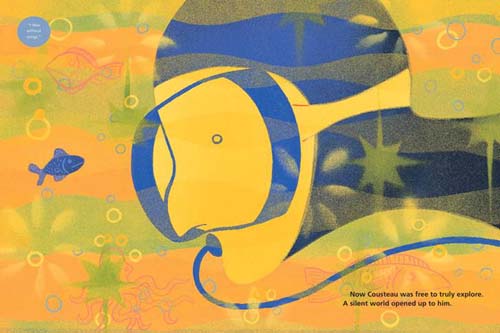
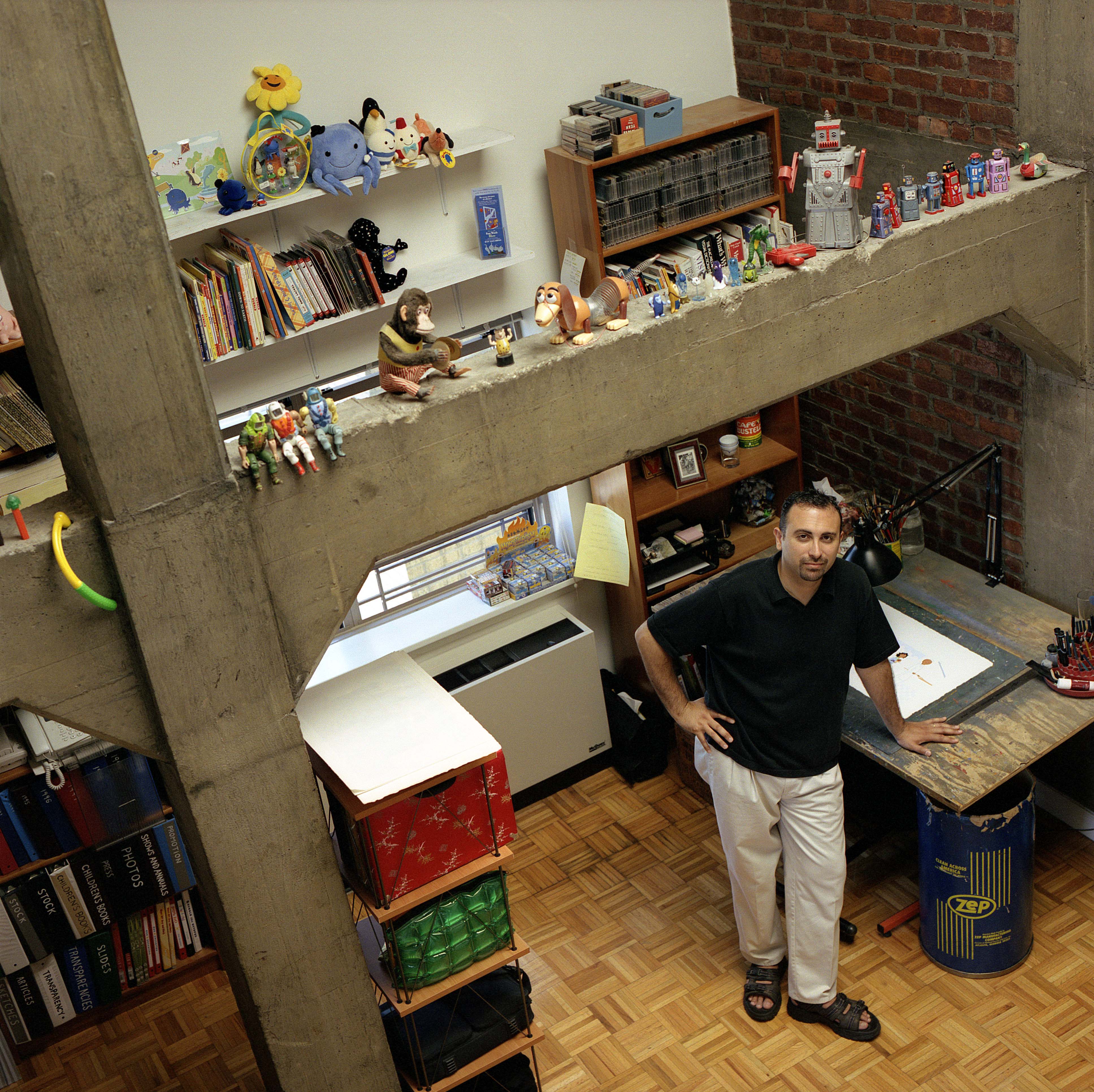
This is not Dan Yaccarino, but this is one of the objects of his hero worship — Jacques Cousteau, the subject of Dan’s engaging new picture book biography, released last month. This is Dan below, in his VERY fun-looking studio. You can even click on the image to see his robots up close:

Good thing I invited him for a breakfast chat, since breakfast is, “by far, my favorite meal,” he told me, “next to lunch, dinner, and snack time. I’m a savory person, rather than a sweet one (just ask my wife). My favorite omelette is Swiss, mushroom, and onion. Along with that, a toasted bialy, slathered with butter, and an exceedingly strong cup of coffee. Yes, I know, I’m a real health nut.”

Read the rest of this entry �